by Ercin Temel | Jul 18, 2025 | Blog
Imagine a business struggling with complex business processes, managing its data in a scattered manner across different systems, and facing challenges in interdepartmental communication. Now imagine a structure where all these processes are consolidated under a single roof, data is transferred in real-time, and every department works in seamless integration. The element that transforms this fragmented structure into a cohesive and efficient system is ERP systems.
ERP is an integrated software solution that combines a business’s finance, production, human resources, sales, and other processes into a unified structure. ERP is more than just software; it is a strategic transformation tool that fundamentally changes the way businesses operate.
What is ERP?
ERP (Enterprise Resource Planning) is a software system that enables a business to manage all its core processes in an integrated manner. It facilitates data flow between different units in areas such as finance, human resources, production, supply chain, and customer relations. This eliminates fragmented data structures within the business and makes all processes more transparent, traceable, and controllable.
Modern ERP systems operate through a single database. This allows all departments to access the same up-to-date data. Information such as stock levels, customer orders, or employee leave status is updated in real-time and communicated to the relevant parties.
ERP systems provide a strategic advantage not only for large-scale companies but also for SMEs seeking growth. They increase operational efficiency, reduce costs, and save time. For this reason, the need for ERP systems in today’s business world is growing steadily.
What are the types of ERP?
Since businesses vary in size, sector, and needs, ERP systems are also developed in different structures and models. These systems, which vary according to their purpose, installation method, and service model, offer solutions tailored to the dynamics of each business.
On-Premise ERP
On-premise ERP systems are software programs run on the company’s servers. They offer significant advantages in terms of security and customization and are particularly preferred in highly regulated industries.
Cloud ERP
Cloud ERP solutions are systems accessed via the internet and managed by the software provider. They have low installation costs, offer flexibility, and updates are performed automatically.
Two-Tier ERP
The two-tier ERP approach is typically used in large holding companies to address the different needs of the central office and its subsidiaries. While a comprehensive system is in place at the central office, lighter solutions are preferred at the subsidiary level.
Why is ERP Important?
As a business grows, not only does the number of employees or production volume increase, but processes also become more complex, communication becomes more difficult, and the risk of inefficiency rises. At this point, ERP systems enable businesses to digitize their operations while also facilitating the complete restructuring of processes. By making processes transparent, centralizing data management, and integrating departments, companies can both streamline their daily operations and gain strategic advantages.
Preventing Process Complexity for Growing Companies
In small-scale businesses, processes are often managed manually or spread across multiple independent software applications. However, as the company grows, these methods become unsustainable. Data sharing between different departments becomes difficult, repetitive tasks increase, and delays in accessing information occur.
ERP systems eliminate this complexity by consolidating all processes into a single centralized platform. All operations, from ordering to invoicing, production to personnel, are carried out in an integrated manner. This ensures transparency in processes, strengthens control mechanisms, and prevents errors from occurring.
Making Quick Decisions and Gaining a Competitive Advantage
In highly competitive markets, making quick and accurate decisions is essential to stand out. ERP systems provide real-time data flow, enabling managers to view the current situation instantly. Critical information such as sales performance, inventory status, and cost analysis becomes accessible with just a few clicks.
This speed makes a difference not only in operational decisions but also in strategic decisions. Being able to act before competitors and respond quickly to changing market conditions directly benefits the business.
Compliance with International Standards and Auditability
In the globalized business world, compliance with international regulations is mandatory. Multinational companies, in particular, undergo regular audits on issues such as tax legislation, financial reporting standards, and data security.
ERP systems provide transparency in external audits by centrally storing all financial and operational data, ensuring a comprehensive view of the organization’s financial and operational activities. They also facilitate reporting by standards. This enables companies to maintain legal compliance and reduce the risk of penalties.
Systematizing Company Culture
A company’s culture is not formed solely by written rules or mission and vision statements. Elements such as daily work practices, communication language, and process management directly shape this culture. ERP systems support the structuring of this culture by establishing specific standards for business processes.
For example, having everyone request leave, enter inventory, or process orders through the same system creates a common language and discipline within the organization. This enhances the sense of professionalism within the company and fosters increased employee loyalty.
How Does ERP Work?
ERP systems operate within a specific workflow to simplify business processes and enhance interdepartmental collaboration. The working logic of ERP systems is based on the following steps:
- Data Entry and Collection
Data related to daily operations is entered into the system by various departments, including sales, production, finance, and human resources.
- Centralized Database Integration
All data is collected in a centralized database. This ensures that information flows between departments without interruption or duplication.
- Data Analysis and Processing
The collected data is analyzed and converted into meaningful information. ERP systems integrate these analyses into decision support mechanisms.
For example, an order entered into the sales module immediately checks stock levels, triggers production planning, and creates accounting records.
- Real-Time Information Sharing
All departments can access data relevant to them in real time. This minimizes delays, information gaps, and coordination issues.
- Reporting and Decision Support
ERP systems provide managers with real-time, customizable reports to support informed strategic decision-making.

Key Components of ERP Systems
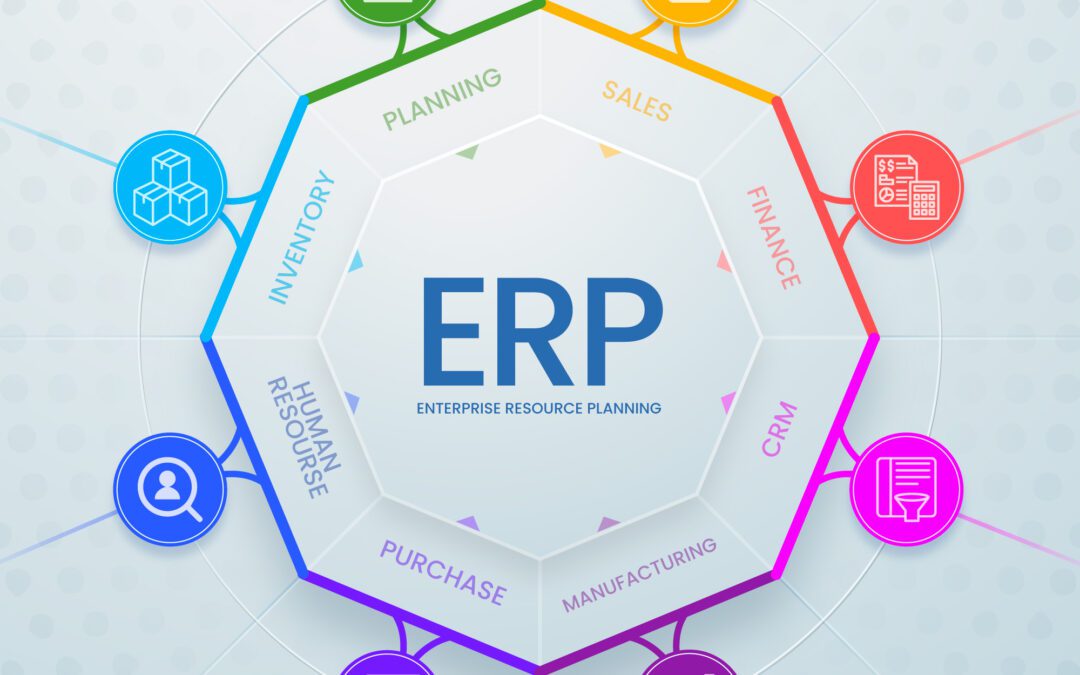
An ERP system is not just a single piece of software; it is a comprehensive and integrated structure consisting of modules that cover all functional areas of a business. These modules work in tandem to collect all the company’s data on a single platform.
Finance and Accounting Module
Effective management of financial processes is crucial to a business’s sustainability. The finance module of ERP digitizes processes such as income and expense tracking, invoice processing, budget management, asset tracking, and financial reporting.
Thanks to this module, all financial transactions are consolidated into a single system, allowing the company to monitor its economic status in real-time. Additionally, documents such as tax returns, balance sheets, and income statements are automatically generated, ensuring transparency during external audits. This enables businesses to manage financial risks more effectively and make strategic decisions.
Purchasing and Supply Chain Management
The process of bringing a product to market includes not only the production phase but also material procurement, supplier management, and purchasing operations. The ERP’s purchasing and supply chain module ensures that the required materials are procured on time and at the correct cost.
Thanks to this module, stock levels are regularly monitored, the system automatically determines reorder points, and relationships with suppliers are managed through a centralized structure. This prevents production disruptions due to material shortages, and purchasing processes proceed in a more transparent and planned manner.
Production Planning and Inventory Management
One of the most critical modules of ERP for manufacturing companies is production planning and inventory management. This module enables the creation of production orders, efficient planning of workstations and machine capacity, and cost calculations on a product-by-product basis.
Additionally, the ERP system tracks the quantities of raw materials, semi-finished products, and finished goods in inventory in real-time. Issues such as overstocking or stock shortages are prevented, and inventory cycles are managed more effectively. This ensures that production processes are maintained seamlessly and at low cost.
Human Resources Management (HR)
Human resources management is the process of effectively managing a company’s most valuable asset: its employees. The ERP’s HR module manages personnel information, personnel files, payroll processes, leave tracking, performance evaluations, and hiring processes from a central system.
Thanks to this module, managers can analyze employees’ past performance, manage the talent pool, and assign the right people to the correct positions. At the same time, employees can track their leave requests, payroll, and development plans through the system.
Customer Relationship Management (CRM)
The CRM module of the ERP system stores information, including customer data, purchase history, complaint records, and communication history, in a centralized structure. This information is an essential resource for both sales and marketing teams.
By tracking customer touchpoints, more personalized services can be provided, resulting in increased customer satisfaction and loyalty. Additionally, sales teams can optimize their sales strategies by analyzing potential customers more effectively.
Reporting and Data Analytics
One of the most significant added values offered by ERP is the conversion of data into meaningful information. Thanks to the reporting and data analytics module, data from all systems is combined, analyzed according to various criteria, and strategic outputs are presented to decision-makers.
This module enables the creation of real-time reports on daily operations, periodic performance analyses, KPI tracking, and forecasting models. This enables managers to assess the current situation and make more informed plans for the future.
Who Should Use ERP?
Quick decision-making, flexible structure management, and data-driven process tracking are critical to the sustainable success of businesses. For this reason, many companies of different sizes are turning to ERP solutions to achieve a more efficient and controlled structure.
The types of businesses that can benefit most from ERP systems:
- Manufacturing businesses with complex processes
Continuously changing order structures, material flow, and production planning can be easily managed.
- Companies operating in multiple locations
Operations in different regions can be monitored and coordinated through a centralized system.
- Rapidly growing small and medium-sized businesses (SMEs)
Helps maintain control over the complex structures that arise during the growth process.
- Companies serving on a global scale
Multi-language, multi-currency, and systems subject to different regulations can be managed on a common platform.
- Companies with complex supply chains and inventory management
Real-time inventory tracking and effective purchasing processes increase operational efficiency.
- Organizations that want to make their financial processes transparent
Revenue and expense tracking, accounting processes, and financial analyses become more secure and consistent with integrated structures.
Benefits of ERP Systems for Companies
Once implemented, ERP systems yield results that directly impact all structural aspects of businesses. The acceleration of processes, more efficient use of resources, and strengthening of decision-making mechanisms are among the most significant effects.
Efficiency and Time Savings
Thanks to ERP systems, repetitive and manual tasks are transformed into automated processes. Tasks such as invoicing, inventory tracking, and order management are completed quickly and accurately by the system. This allows employees to allocate their time to more strategic and value-adding tasks. As a result, efficiency increases at both the individual and organizational levels.
More Comprehensive Insights
Data collected and analyzed in real time provides managers with the opportunity to conduct deeper analyses. Since data from different departments is consolidated into a common database, retrospective evaluations, performance analyses, and forecasting studies can be performed much more effectively. This enables decisions to be made based on concrete data rather than intuition.
Lower Risk
Ensuring data integrity and conducting operations through a centralized structure reduces the risk of errors and inconsistencies. Any potential disruptions in processes are detected promptly, enabling quick intervention. At the same time, audit processes are simplified, and a more secure structure is established in areas such as legal compliance and reporting.
Interdepartmental Communication and Data Integrity
ERP systems enable all departments to communicate through the same platform. Since units such as sales, production, accounting, and human resources work on a standard data structure, the flow of information is uninterrupted. This both increases collaboration and enables decisions to be made more quickly and consistently.
Error Reduction and Process Control
Automated processes reduce the need for manual intervention. This minimizes human error and increases process consistency. The ability to systematically monitor workflows facilitates the early detection of potential issues and the development of solutions.
Cost Optimization
ERP systems reduce costs by preventing unnecessary expenses. The system detects situations such as excess inventory, resource waste, overproduction, or underproduction in advance and takes the necessary actions. More planned processes result in significant reductions in both direct and indirect costs.
Quick Decision-Making with Real-Time Reporting
ERP systems offer customizable reports that are enriched with real-time data. These reports enable managers to analyze the situation and take action quickly without delay. Primarily during crises or sudden market shifts, making swift decisions can provide a competitive advantage.
Things to Consider When Choosing ERP
Since ERP systems are long-term investments, it is essential that the chosen software fully meets the business’s needs. Choosing the right ERP system means not only ensuring that the process runs efficiently, but also preventing problems that may arise in the future.
Company Size and Sectoral Needs
Not every ERP software is suitable for every business. The needs of a small-scale business may differ significantly from those of a large manufacturing company. Additionally, industry-specific differences also play a decisive role in the selection process. For example, an ERP system designed for manufacturing may not have the same impact in the logistics sector. Therefore, the software must be suitable for both the business scale and industry dynamics.
User-Friendly Interface and Mobile Access
The ease of use of an ERP system is just as critical as its power. A user-friendly interface enables employees to adapt to the system more quickly and efficiently. Additionally, systems that offer mobile access make it easier for field teams or managers outside the office to participate in the process. This enhances speed and flexibility in the workflow.
Support and Service
The work does not end after the ERP system is installed. It requires continuous updates, maintenance, and user support. Therefore, the provider’s ability to offer an uninterrupted and adequate support infrastructure is crucial for the system’s sustainability. A reliable support infrastructure is essential for the system to operate smoothly and without issues in the long term. Additionally, training support, ease of use, and customization support should also be included in the evaluation process.
Integration Capability (CRM, e-Invoice, e-Waybill, etc.)
In the modern business world, it is unthinkable for ERP systems to operate in isolation. ERP solutions that can be seamlessly integrated with existing CRM, human resources, accounting, e-Invoice, e-Waybill, and other systems ensure the uninterrupted operation of all business processes. This integration capability creates significant advantages in terms of data consistency and operational speed.
License Cost and Total Cost of Ownership (TCO)
When selecting an ERP system, the total cost of ownership (TCO) should be considered beyond the initial purchase price. In addition to the license fee, installation, maintenance, support, training, updates, and hardware requirements are also factors that affect the long-term cost. Therefore, budget planning should be done with a long-term perspective rather than a short-term one.
Use of ERP Systems in Different Sectors
ERP systems stand out for their flexible structures, which can be tailored to meet the needs of various sectors. Used in diverse fields such as manufacturing, healthcare, retail, and logistics, these systems enable sector-specific processes to be managed in a more organized, efficient, and controllable manner.
Manufacturing Industry
The manufacturing sector encompasses numerous stages, ranging from supply chain management to production planning, quality control, and shipping. ERP systems integrate all these stages, enabling every step of the process—from raw material procurement to final product delivery—to be managed through a single system. This increases production efficiency, reduces costs, and minimizes errors.
Retail and E-Commerce
In the retail and e-commerce sectors, where inventory turnover rates are high, ERP systems simplify product tracking, accelerate order processes, and centralize customer information. Complex operations, such as campaign management and multi-store or platform synchronization, are executed efficiently through ERP, directly contributing to customer satisfaction.
Healthcare Sector
In the healthcare sector, ERP systems facilitate the seamless integration of critical processes, including patient record management, appointment scheduling, medical inventory control, and billing. Secure data storage and quick access to the right people improve patient care quality while reducing operational burden. Compliance tracking is also made easier.
Food and Beverage Sector
Quality control, traceability, and supply chain management are crucial in food production. ERP systems facilitate the tracking of production batches, integrate with environmental parameters such as temperature, and systematically manage critical data, including expiration dates. This ensures legal compliance and supports safe food production.
Logistics and Transportation
In logistics, timing, cost control, and fleet management are critical processes. ERP systems optimize transportation planning, track vehicle locations and routes, and integrate warehouse management. This prevents delays, reduces operational costs, and makes shipping processes more controlled.
by Ercin Temel | Jul 17, 2025 | Blog
Accurately assessing the performance of production lines is a critical step in increasing efficiency. OEE (Overall Equipment Effectiveness), which addresses this need, is a powerful metric that measures how much of a machine’s production capacity is being utilized. By combining three key components—equipment availability, performance, and product quality—it provides a comprehensive analysis of production process efficiency.
What is OEE?
Efficiency is recognized as one of the cornerstones of sustainable production. To truly assess a company’s production performance, it is not enough to look at how much it produces; it is also essential to evaluate how effectively it produces. OEE is a powerful performance measurement tool that addresses this need.
OEE reveals how efficiently a production line or equipment is operating in terms of availability, performance, and quality. It guides businesses in both improving daily operations and making strategic decisions.
The Basic Components of OEE
Three core components are evaluated together in calculating OEE. When analyzed separately, these components make production line losses more clearly visible.
Availability
Availability refers to the actual time a piece of equipment contributes to production during its planned production period. The planned production period is calculated excluding interruptions such as shifts, maintenance breaks, or breaks. The availability rate is directly affected by unplanned downtime such as breakdowns, mold changes, and setup times during production.
Reducing downtime is critical to improving OEE. The less the equipment stops and the longer it runs, the higher the availability.
Performance
Performance indicates how close the equipment operates to its theoretical maximum speed during the time it is running. Slowdowns, minor downtime, operator errors, or material feeding issues during production are among the primary factors that reduce performance.
Even if the machine appears to be running, if it is operating below the required speed, this indicates a loss of performance. Therefore, the performance ratio must be considered to accurately analyze efficiency.
Quality
The quality ratio indicates how many of the produced items are actually usable, meaning they were produced correctly the first time. Defective products, parts sent for rework, and waste negatively impact this ratio. The higher the quality ratio, the less waste is generated during production. Minimizing defective production directly reduces production costs and increases customer satisfaction.
How is OEE Calculated?
In order to understand OEE correctly, it is first necessary to define the basic components that make up this concept. These components, each representing a different aspect of the production process, together provide a numerical representation of the overall efficiency of the equipment. The calculation process is also shaped by this structure.
OEE Calculation Formula
OEE = Availability x Performance x Quality
This formula clearly shows how effectively the production line is operating.
For example:
- Availability: 85%
- Performance: 90%
- Quality: 95%
In this case, OEE: 0.85 x 0.90 x 0.95 = 72.675%. This indicates that the equipment is utilizing approximately 73% of its theoretical capacity efficiently.
Calculating each component separately
- Availability = (Actual Operating Time / Planned Production Time)
- Performance = (Actual Cycle Time / Theoretical Cycle Time)
- Quality = (Number of Defect-Free Products / Total Number of Products)
When these three ratios are tracked separately, it becomes clearer where improvements are needed. For example, if availability is low, it means the equipment is frequently stopping, and if quality is low, it means a large number of defective products are being produced.
What does the OEE percentage represent?
The OEE ratio obtained provides a numerical summary of the company’s production efficiency. The closer this ratio is to 100%, the more efficiently the company is producing. However, in many industries, an OEE of 85% or higher is considered excellent.
OEE Value Ranges and Interpretation
- 85% – 100%: World-class excellent production performance
- 75–85: Strong but improvable performance
- 60–75: Average production efficiency
- Below 60: Processes experiencing critical losses
Considerations When Calculating OEE
When calculated correctly, OEE provides valuable insights into the production line. However, for these calculations to be reliable and meaningful, certain criteria must be considered. Data quality and clearly defined processes are decisive in this regard.
- Incomplete or incorrect entry of data such as unplanned downtime, cycle time, and number of defective products prevents the calculated OEE values from reflecting reality and may misdirect the actions to be taken. Therefore, it is of great importance that all data is entered completely, on time, and from accurate sources.
- Clearly distinguishing between downtime causes such as breakdowns, maintenance, mold changes, material waiting, or personnel shortages helps to analyze which causes lead to production losses. If this distinction is not made, the focus of improvement efforts may be misdirected.
- For the performance ratio to be calculated accurately, the standard cycle time must be correctly defined. This time must be consistent with the ideal value in the machine’s technical catalog. Otherwise, high or low OEE results may lead to misinterpretation.
- Which products are considered defective at the end of production must be determined in advance. Unclear quality criteria can cause inconsistencies in the quality ratio within OEE and undermine the accuracy of quality-related decisions.
- If data entries are made from different systems, this can lead to confusion. Collecting all data centrally from a single platform ensures consistency and helps make analyses more reliable.
- If there is no automatic data collection system, a disciplined process must be followed for manual data entries. Operators must keep regular records, responsible persons must check them, and cross-checks must be performed when necessary.
- A low OEE value does not always indicate poor performance. Evaluations made without considering contextual factors such as production type, product complexity, equipment age, or shift conditions can lead to inaccurate results.
Methods That Can Be Applied to Increase OEE
Keeping the OEE ratio high is not enough to keep machines running. It is also very important to maintain production in an efficient, fast, and smooth manner. For real improvement, the causes of losses must be correctly analyzed, maintenance processes must be optimized, production transitions must be accelerated, and a culture of continuous improvement must be adopted.
Root Cause Analysis
Identifying the true causes of productivity losses requires going beyond the surface-level symptoms. Root cause analysis is typically conducted using the “5 Whys” technique. This method enables identifying the underlying causes of a problem:
- Why was the production plan delayed?
Because the required raw materials did not arrive on time.
- Why didn’t the raw materials arrive on time?
Because the supplier postponed the delivery date.
- Why did the supplier postpone the delivery date?
Because the order was communicated to them late.
- Why was the order communicated late?
Because inventory levels were not tracked properly.
- Why were inventory levels not tracked properly?
Because the inventory control system was not updated regularly.
Through this inquiry, it becomes clear that the delay was not solely due to the supplier, but actually stemmed from a lack of control in internal processes. This allows us to focus on the structural causes of the problem rather than its surface-level symptoms. This approach is a critical step toward increasing OEE and achieving long-term improvements in processes.
Identifying root causes enables the implementation of permanent solutions that prevent the same issue from recurring. This leads to a sustainable increase in both OEE and overall production quality.
Predictive Maintenance Applications
Unplanned downtime is one of the most critical factors that reduce the OEE ratio. To eliminate this downtime, it is necessary to go beyond traditional periodic maintenance. Predictive maintenance enables the prediction of failures before they occur by continuously monitoring equipment performance data.
Sensors, vibration analysis, temperature measurements, and AI-supported analysis software are used to monitor the health of machines in real time. This allows interventions to be made only when necessary, preventing unnecessary downtime, optimizing spare part usage, and reducing maintenance costs. This approach ensures production continuity while also significantly increasing OEE values.
SMED (Single Minute Exchange of Die)
Die and setup changeover times during production transitions cause the line to stop, reducing efficiency. The SMED (Single Minute Exchange of Die) method aims to reduce these changeover times to minutes.
In practice, changeover steps are divided into internal (performed while the machine is stopped) and external (performed while the machine is running). As many steps as possible are externalized and standardized.
Additionally, the tools and equipment used during changeovers are simplified, and employees are trained to speed up the process. This application increases the active operating time of the production line, enables more flexible production planning, and directly improves the “availability” rate of the OEE components.
Kaizen and Continuous Improvement
Increasing OEE requires not only technical interventions but also the adoption of a culture of continuous improvement within the team and the active participation of all employees in the process.
The Kaizen philosophy focuses on continuous small improvements rather than major leaps. In this approach, employees report issues they observe in daily production processes, develop suggestions, and these suggestions are implemented step by step to achieve gradual improvement.
This systematic approach, which aims to achieve continuous improvement, increases employee engagement while also consistently boosting performance. Moreover, these improvements gradually translate into significant gains, enhancing the overall efficiency of the production line and ensuring that OEE is maintained at a sustainably high level.
Benefits Provided by OEE
OEE tracking is a powerful tool that guides businesses in many areas beyond measuring production performance, such as decision-making, resource management, and strategic planning. When used correctly, this metric provides deep insights into production processes and gives businesses significant strategic advantages. Effective OEE tracking enables sustainable improvement in both operational and financial areas.
Reducing Unplanned Downtime
OEE enables the categorization and analysis of downtime causes. Unplanned downtime caused by issues such as breakdowns, setup, waiting, or material shortages is clearly identified through these analyses. This allows businesses to conduct root cause analysis on the most frequently recurring downtime types and take preventive actions. This results in fewer interruptions and greater continuity on the production line.
Increasing Equipment Efficiency
The effectiveness of machine and equipment use can be monitored in real time through the OEE metric. The proportion of production time spent on value-adding activities is clarified. If a machine is performing poorly, the cause is identified, and the equipment is brought to full capacity. This increases capacity utilization and accelerates the return on investment.
Strengthening Quality Management
The quality component of OEE directly measures the rate of defective products on the production line. This allows quality issues to be identified early and addressed before they spread throughout the entire production process. Early detection of quality losses increases customer satisfaction while also reducing rework and scrap costs.
Reducing Operational Costs
Inefficiency leads to waste of time and resources. With OEE, these areas of waste are identified and eliminated. Valuable resources such as energy, materials, labor, and time are used only where necessary. This reduces overall operational costs and enables more intelligent resource management.
Accelerating Decision-Making Processes
OEE enables real-time processing of data from the field. This gives managers the ability to make data-driven decisions rather than event-based decisions. Thanks to up-to-date, objective, and transparent data, decisions regarding production improvements can be made more quickly and accurately. This allows labor to be allocated to more strategic areas.
Adoption of a Culture of Continuous Improvement
Regular monitoring of OEE fosters the development of a performance-based culture within organizations. Comparisons can be made between teams, common goals can be set, and teams can work together to achieve these goals. This structure supports continuous improvement philosophies such as “Kaizen,” making productivity gains sustainable.
Data-Driven Investment Planning
Since equipment performance is measured numerically, it is clear which machines are operating at sufficient capacity and which need to be replaced. This transparency ensures that investment decisions are based on real data rather than guesswork. Modernization, maintenance, or new equipment investments can be made at the right time.
by Ercin Temel | Jul 11, 2025 | Blog
With the Industry 4.0 revolution, production systems are undergoing a significant transformation. In this new era, where automation, artificial intelligence, and data analysis converge, connection speed and data transfer quality have become more critical than ever. At the heart of all this transformation is 5G technology, which stands out as one of the cornerstones of smart factories. Enabling lag-free communication, high speeds, and the simultaneous connection of billions of devices, 5G is reshaping the entire industrial ecosystem, from production to management, logistics to strategic decision-making processes.
The Changing Industrial Landscape with 5G
More flexible, data-driven systems are replacing traditional production models with high connectivity capacity. Industrial sites are no longer just production areas, but structures that collect data in real-time, analyze it, and can direct the process autonomously. 5G technology is accelerating this transformation process and making not only production but also maintenance, quality control, occupational safety, and management functions smarter.
Machines and systems in the field can communicate with each other continuously and seamlessly thanks to the low latency provided by 5G. As a result, many processes that were previously performed manually are now automated, utilizing real-time data flow, which reduces the need for human intervention. This automation in processes both minimizes the margin of error and increases efficiency.
5G-enabled infrastructures enable industrial production to become more flexible, reliable, and predictable.
What is a Smart Factory and Why Does it Need Fast Connectivity?
Smart factories are integrated systems that collect data at every stage of the production process, analyze this data, make autonomous decisions, and optimize the process. These structures are defined as digital production environments with high connectivity, requiring constant data exchange between machines, sensors, software, and human resources. Unlike traditional production systems, smart factories involve not only automation but also learning and evolving production intelligence.
For this level of coordination to be achieved, the communication infrastructure must be both powerful and reliable. In particular, low latency, high data transmission speeds, and network stability play a critical role in enabling intelligent systems to respond instantly. 5G provides the infrastructure necessary for such an integrated structure to function correctly. 5G technology enables advanced applications such as machine-to-machine (M2M) communication, real-time monitoring, remote control, and artificial intelligence integration.
The success of smart factories depends not only on the technologies used but also on how quickly and seamlessly these technologies can communicate with each other. An infrastructure supported by 5G enables data flow between systems with near-zero latency, optimizing every moment of production and laying the groundwork for operational excellence.
Benefits of 5G Technology for Factories and Industry 4.0 Compatibility
5G technology provides a robust infrastructure for the digital transformation process by meeting the requirements of Industry 4.0, such as speed, flexibility, and security. The high compatibility between these two structures plays a key role in making innovative production systems efficient and sustainable:
Ultra-Low Latency
One of the most striking features of 5G technology is its ultra-low latency, which reduces communication delays to milliseconds. This offers critical advantages, especially in robotic systems, automated production lines, and high-risk environments that require remote control. Since data exchange between machines occurs almost instantaneously, systems can respond much more quickly to environmental changes.
High Data Transmission Speed
5G supports data transmission speeds of up to 10 Gbps per second, enabling the instant processing of large datasets. Thanks to this high speed, processing large volumes of data can be completed in just a few seconds. This speed plays a crucial role, especially in systems that require high data volumes, such as those used in artificial intelligence, machine learning, and image processing. Images captured by high-resolution cameras on production lines can be analyzed without delay, enabling instant decisions in quality control processes. This contributes to faster processes, increased efficiency, and minimized errors.
High Connection Capacity (Massive IoT)
5G stands out with its extensive connection capacity, enabling millions of devices to connect simultaneously. This feature enables all components in a factory environment, which is filled with sensors, cameras, mobile robots, and production machines, to communicate continuously and seamlessly. Data from each device is instantly transferred to central systems, evaluated, and thus all processes in the factory can be managed in an integrated and synchronized manner. This structure is crucial for the real-time production model that underpins smart factories.
Advanced Security Infrastructure
Industrial data is of great importance in terms of both commercial secrets and operational continuity. 5G technology takes data security to the highest level with features such as advanced encryption algorithms, user authentication protocols, and network segmentation. In addition, the ability to uniquely identify each device on the network provides an advantage for early detection of malicious attempts. This infrastructure makes 5G indispensable, especially in critical infrastructures, in today’s world, where the risk of cyberattacks is on the rise.
Network Slicing
Another revolutionary feature of 5G is network slicing, which enables the creation of multiple virtual networks on the same physical network. Each slice can be explicitly configured for a particular application or operational need. This allows critical production applications to run smoothly without being affected by other network traffic.
Energy Efficiency
The energy management protocols introduced with 5G enable devices to send and receive data only when needed. This prevents IoT devices from remaining constantly active, thereby reducing unnecessary energy consumption. At the same time, central systems can optimize the usage times of energy-intensive machines, thereby reducing total energy consumption. This contributes to environmental sustainability goals while also lowering operational costs.
Low Energy Consumption Device Support
With its structure that also supports LPWAN (Low-Power Wide-Area Network) devices, 5G offers significant advantages in applications that require low energy consumption. Sensors powered by long-lasting batteries can provide service for years without requiring maintenance. This significantly reduces maintenance costs and operational burdens for sensors located in extensive facilities or hard-to-reach areas. Additionally, these devices contribute to the overall efficiency of the system by measuring energy usage on the production line in real-time.
High Network Stability and Uninterrupted Communication
5G prevents interruptions on production lines with its highly stable connection. Thanks to high network stability, data exchange between machines, sensors, and automation systems occurs seamlessly 24/7. In critical applications, this stability plays a vital role in preventing production stoppages, data loss, and operational delays. This ensures the sustainability and quality of production processes.
Production Processes Transformed by 5G
The integration of 5G technology into production sites increases operational efficiency and minimizes errors by reducing the need for human intervention:
The Impact of 5G on Automation Systems
The data flow between robots, sensors, and automated machines on production lines occurs in milliseconds with the help of 5G. This high speed enables production systems to self-regulate, detect anomalies, and take action automatically. While human intervention is minimized, production continuity and safety are maximized.
Autonomous Robots and AGVs (Automated Guided Vehicles)
Autonomous robots and vehicles that move independently within the factory can process data from their surroundings instantly, thanks to the low-latency communication provided by 5 G technology. This enables them to perform complex tasks simultaneously, avoid collisions, plan routes in real time, and integrate seamlessly into flexible production lines.
Development of Remote Monitoring and Intervention Systems
With 5G, engineers and technicians can remotely monitor machines on the production line in real time and intervene immediately when a malfunction or deviation is detected. This feature provides a significant advantage, especially in extraordinary situations such as a pandemic or when experts are located in different cities. Countries need to intervene.
VR/AR-Supported Production and Maintenance Processes
Virtual reality (VR) and augmented reality (AR) applications operate seamlessly and in high resolution with 5G. This enables operators to remotely guide or assist with the assembly, maintenance, and repair processes of complex machines. Additionally, training new personnel can be conducted more effectively through the use of simulations.
Cybersecurity and Network Management with 5G
The new generation 5G infrastructure offers advanced security layers in addition to high speed. Thanks to innovative security protocols, network segmentation, and device-based authorization systems, industrial facilities are becoming more resistant to cyber threats. This security structure plays a crucial role, particularly with the growing number of industrial IoT devices.
Real-Time Quality Control and Error Detection
Thanks to 5G, sensors, cameras, and analysis systems on the production line can continuously transmit data, enabling real-time quality control. Even micron-level errors in products can be detected during production and corrected without stopping the process. This reduces waste and improves product quality.
Production Flexibility and Scalability
The extensive connectivity capacity provided by 5G enables production lines to be configured more flexibly. New machines or systems can be easily integrated, and the system can be scaled up or down according to production demand. This flexibility allows companies to adapt more quickly to rapidly changing market conditions.
Real-Time Inventory and Supply Chain Tracking
Smart sensors and RFID systems integrated into production processes enable real-time monitoring of the entire supply chain, from raw material input to final product shipment, utilizing 5G technology. This facilitates inventory optimization, early detection of supply issues, and cost reduction.
Real-Time Decision Making and Artificial Intelligence Integration with 5G
Making the right decisions at the right time in production processes is crucial for efficiency and quality. While artificial intelligence technologies are revolutionizing these decision-making processes, the 5G infrastructure fully unlocks the potential of these technologies. In particular, real-time data flow enables artificial intelligence to establish fast, accurate, and continuously learning decision-making mechanisms.
Data delays experienced in traditional network infrastructures make it challenging for artificial intelligence systems to intervene in real-time. However, thanks to the ultra-low latency offered by 5G, data from sensors is analyzed instantly, and systems can take immediate action.
Additionally, 5G enables the high-speed transfer of massive data sets. This enables artificial intelligence systems to operate with constantly updated data, resulting in more accurate predictions. Surface defects detected by cameras in quality control processes are instantly transmitted to the center via 5G, and artificial intelligence algorithms can evaluate this data to determine which machines on the production line require adjustments to their settings.
AI-supported resource management also becomes more effective thanks to the 5G infrastructure. Real-time data is processed alongside historical data in areas such as raw material consumption, energy usage, and workforce planning to create the most efficient usage scenarios. This makes an essential contribution to achieving sustainability goals.
The Impact of 5G on Energy Efficiency and Sustainability
Sustainability has evolved from being an environmental preference in today’s industry to a strategic necessity that provides a competitive advantage. Reducing carbon emissions, optimizing energy use, and utilizing natural resources more efficiently are among the top priorities for industrial enterprises. The tools offered by digital transformation are crucial to achieving these goals, and 5G technology plays a significant role in this regard.
The 5G infrastructure enhances the effectiveness of intelligent energy management systems by providing real-time and uninterrupted data flow between machines and systems in production facilities. These systems can monitor instantaneous energy consumption, analyze the amount of energy each piece of equipment is consuming, and identify unnecessary consumption, thereby adjusting the operating schedule of the systems accordingly. As a result, production processes become more sustainable with less energy, while operational costs are reduced.
The low latency and high data transmission capacity offered by 5G provide a significant advantage, especially in fault detection and maintenance processes. Equipment malfunctions that could lead to energy loss are immediately detected through sensors, and the system can automatically intervene. This not only saves energy but also increases the overall efficiency of the system. Predictive maintenance applications tailored to real-time conditions take precedence over planned maintenance processes.
Furthermore, in 5G-enabled production environments, energy consumption and environmental impacts can be monitored in real-time through IoT devices. These data play a significant role in both internal audit processes and sustainability reporting. Transparent monitoring of energy consumption enables companies to enhance their environmental performance and reduce their carbon footprint.
Towards Industry 5.0 and 6G
While Industry 4.0 is still undergoing transformation, the technology and manufacturing world is already looking toward new horizons such as Industry 5.0 and 6G. This transition process also entails a strategic restructuring of infrastructure, human resources, digital culture, and business models. Industry 5.0 represents a more personalized and value-oriented production approach centered on human-machine collaboration.
In this process, 5G technology is one of the most critical building blocks, laying the groundwork for Industry 5.0. Companies must already be prepared for the new realities that 6G will bring, such as hyper-connectivity and autonomous decision networks. The elements promised by 6G, such as 1 Tbps data speeds, low energy consumption, ultra-secure connectivity, and high mobility, will create revolutionary effects in areas like remote production, autonomous system management, and real-time global integration.
Therefore, some strategic steps that must be taken today are as follows:
- Addressing the 5G transition alongside organizational transformation
- Increasing R&D investments in technologies that will be enhanced by 6G, such as digital twins, artificial intelligence, and augmented reality
- Developing long-term plans for critical data security, network stability, and system integration
- Increasing domestic and international partnerships to ensure integration into the global technology ecosystem
by Ercin Temel | Jul 10, 2025 | Blog
Sustainable manufacturing is no longer viewed as a concept limited to environmental awareness. In today’s industrial environment, shaped by intense competition and rapidly changing market dynamics, sustainability has become a strategic necessity for businesses to ensure long-term profitability and manage risks effectively. Rising consumer expectations, fragility in global supply chains, and tightening environmental regulations are prompting manufacturers to develop solutions that reduce energy consumption, minimize waste, and ensure full transparency in production processes.
In this context, digital technologies are opening up new opportunities. AI-powered systems, in particular, enable sustainability goals to be transformed from theoretical objectives into practical actions through the analysis of big data and automation capabilities. These technologies provide optimization in various areas, including production and logistics, as well as maintenance processes and resource management, while simultaneously reducing environmental impact, lowering operational costs, and making decision-making processes more predictable.
What Is Sustainable Manufacturing?
Sustainable manufacturing considers traditional production goals such as speed, capacity, and profitability through a broader impact perspective. This approach represents a comprehensive management model designed to optimize environmental, economic, and social factors simultaneously. On the environmental side, data is collected across the entire product lifecycle from raw material sourcing to end-of-life disposal, including metrics such as water usage, energy intensity, CO2 and other greenhouse gas emissions, waste generation, and biodiversity impact. These metrics are tracked using quantitative tools and regularly evaluated to assess sustainability performance. Life Cycle Assessment (LCA) and carbon footprint analyses support these evaluations. The results are reported within environmental management systems that are aligned with standards such as ISO 14001, ISO 14064, and ISO 50001.
From an economic standpoint, sustainable manufacturing focuses on increasing efficiency, reducing quality fluctuations, and lowering the Total Cost of Ownership (TCO). It also includes generating added value from waste and maximizing material efficiency through second-life scenarios, in line with the principles of a circular economy.
Socially, sustainable manufacturing emphasizes worker health and safety, fair compensation, inclusive workforce policies, and strengthening stakeholder engagement. Transparent reporting (GRI, SASB, ESRS) and alignment with the United Nations Sustainable Development Goals (SDGs) help protect long-term corporate value while building public trust.
Environmental, Economic, and Social Dimensions
Sustainable manufacturing can only be achieved through balanced management of these three dimensions. Environmental indicators aim to protect our planet, economic indicators maintain business competitiveness, and social indicators ensure stakeholder well-being.
Environmental Dimension
Reducing energy and water consumption, minimizing carbon emissions, optimizing waste disposal, and adopting circular economy principles form the environmental foundation of the production ecosystem.
AI-based sensor networks monitor real-time energy profiles and dynamically adjust equipment parameters to eliminate unnecessary consumption.
Economic Dimension
Increased productivity, reduced maintenance costs, and greater supply chain transparency support profitability.
AI-powered forecasting models predict demand fluctuations, supporting the development of the most profitable product portfolio.
Social Dimension
Worker safety, skill development, and fair working conditions are key indicators of social sustainability.
Image processing solutions instantly detect hazardous behaviors and automatically activate safety protocols. Digital training platforms enhance the technical competencies of workers.
Industrial Sustainability Criteria
ISO 14001 for environmental management, ISO 50001 for energy management, and global reporting initiatives (such as GRI and CDP) enable performance tracking with tangible metrics. AI-based control panels automatically gather the required data and make it easily accessible for audits.
In industries with high energy usage, “best available techniques” (BAT) identified through mass-energy balance calculations and process simulations are used as benchmarks. AI compares real-time process data with BAT targets and instantly reports deviations. Operators can use these resources to adjust process parameters accordingly.
How Does Artificial Intelligence Play a Role in These Processes?
To realize sustainability goals, high-frequency data from the field must be analyzed and transformed into actionable insights. Through machine learning and optimization algorithms, AI analyzes complex process variables and offers productivity-enhancing recommendations.
Energy Efficiency Management
AI analyzes hourly or daily energy consumption records of facilities and builds predictive models for future energy needs. Advanced controllers implement demand response scenarios based on price signals and production plans by balancing load curves to optimize energy consumption. By minimizing the start-stop cycles of production equipment, energy intensity (in kWh/kg of product) is reduced.
Additionally, in auxiliary facilities such as heat exchangers or compressor stations, AI-based “self-tuning” control loops determine optimal setpoints in real time, achieving 8–15% savings in consumption.
Waste and Scrap Reduction
Deep learning models trained on quality parameters can detect surface defects or dimensional deviations in seconds. Error patterns are integrated into process feedback through root cause analytics, and out-of-tolerance conditions are corrected.
For example, in plastic injection processes, parameters such as mold temperature, injection pressure, and cooling time are optimized by AI. As a result, both waste rates decrease, and product quality improves consistently.
Resource Reduction Through Process Optimization
In energy-intensive units like reactors, kilns, or biotechnological fermenters, AI simultaneously evaluates heating curves, feed rates, and chemical conversion ratios. Multivariable control (MPC) algorithms minimize raw material and auxiliary chemical consumption without compromising quality. This results in lower CO2 emissions per unit of product, offering cost advantages.
AI Application Areas for Sustainability
AI translates sustainability goals from reports into tangible on-site actions. In doing so, environmental impact is reduced while costs and operational risks remain under control.
Production Line Optimization
Digital twin platforms create virtual replicas of production lines to test scenarios, such as capacity increases, layout changes, or parameter revisions, without requiring physical intervention. This approach reduces downtime and supports data-driven investment decisions.
Preventing Unnecessary Resource Use Through Predictive Maintenance
Sensor data is analyzed using anomaly detection models. Warning signs, such as bearing wear, oil viscosity loss, or increased motor temperature, are detected early. Scheduled maintenance windows are optimized to prevent production losses and spare parts waste.
Supply Chain Optimization and Carbon Footprint Tracking
AI-powered demand forecasting models make order planning dynamic. Logistics optimization selects load and route parameters according to the lowest emission scenarios. Blockchain-based tracking solutions accurately record the product’s carbon footprint, from raw material to shipment, in a verifiable manner.
Achieved Benefits
AI-driven sustainability programs improve environmental performance while strengthening business profitability. Measurable progress is achieved across indicators such as energy use and raw material efficiency, facilitating regulatory compliance and enhancing brand value.
Reduction in Carbon Emissions
When energy optimization, demand management, and low-emission logistics strategies are integrated, greenhouse gas emissions can be reduced by 10–25% at the corporate level. This decrease can translate into financial returns in carbon credit markets.
Reduction in Raw Material and Energy Consumption
Real-time process parameter adjustments increase raw material efficiency. For example, in cement kilns, AI-assisted heat control reduces clinker energy intensity (kWh/ton), resulting in annual savings worth millions of dollars.
Traceability of Environmental Impacts
Real-time dashboard reports present metrics such as water consumption, NOx emissions, and quantities of waste toner or oil in standardized formats. Regulatory audits accelerate, and access to green financing programs becomes easier.
Barriers to AI-Enabled Sustainability
Although AI is a powerful catalyst on the path to sustainable manufacturing, various obstacles can emerge during implementation. These challenges range from technological infrastructure to legal regulations and directly impact project scalability.
Adapting to Data-Driven Systems
Legacy equipment often lacks sufficient sensor capacity, leading to incomplete or low-resolution process data collection. Inconsistent data from different lines lowers the accuracy of centralized analytical models. Industrial IoT transformations, retrofit kits, and wireless sensor networks help bridge this gap.
Data management strategies must be supported with unified database structures and shared metadata dictionaries. This eliminates data silos and continuously feeds models with reliable inputs. Tangible benefits from pilot projects provide convincing evidence for broader IoT investments across the organization.
Transparency and Traceability of Systems
Complex AI models are often perceived as “black boxes.” When operators cannot see how outputs are generated, they hesitate to intervene. Explainable AI techniques mitigate this issue by presenting model decision paths through clear visuals.
Methods like SHAP or LIME demonstrate the weight a model assigns to each sensor input. Additionally, model monitoring dashboards report deviation trends on a daily basis. This transparency builds user trust and provides early warning signals to quality management teams.
Compliance with Legal and Ethical Standards
Data protection laws (such as GDPR) impose strict rules on how personal data is processed in AI projects. When handling worker data or supplier information in factory settings, anonymization protocols are mandatory. Sustainability reporting must also include verifiable and traceable data sets in accordance with GRI and ESRS standards.
Frequently Asked Questions
How does artificial intelligence support sustainability?
By analyzing real-time data on energy use, raw material consumption, and emissions, AI optimizes process parameters, reducing waste and energy loss.
How does AI help reduce energy consumption?
Machine learning models evaluate production demand, energy tariffs, and equipment performance to automatically update target values, such as machine temperature, pressure, or speed, according to real-time conditions. This prevents unnecessary energy usage.
Can every manufacturing facility benefit from these systems?
If sensor infrastructure is established and data quality is improved, AI-based sustainability solutions can be gradually implemented in small, medium, or large-scale facilities.
by Ercin Temel | Jul 3, 2025 | Blog
Supply chain management stands out as a fundamental area that directly affects operational continuity and competitive advantage for businesses. Increasing data traffic, variable customer demands, external resource dependency, and multi-layered network structures have highlighted the limitations of traditional approaches. These developments have rendered definitions that associate the concept of supply chain solely with material flow inadequate. Now, the entire process of planning, decision-making, forecasting, and action must be addressed as a whole.
AI agent solutions, which are at the center of this transformation, offer high added value to every stage of the supply chain with their data analytics capabilities and autonomous movement abilities. These systems, which are capable of learning and adapting contextually, form the basis of a new era in supply chain management.
Current State of Supply Chain Management
Although the supply chain is often perceived as a structure that merely represents the flow of products between the manufacturer and the consumer, it is actually a much broader and multi-layered system. This system encompasses numerous interconnected processes such as planning, procurement, production, inventory management, logistics operations, customer service, and return processes.
With the impact of globalization, supply chains have become even more complex, dynamic, and multi-sourced. However, this development has also brought about various structural issues in terms of control and coordination. Problems such as data inconsistencies between processes, inadequate response mechanisms to sudden changes, and lack of operational flexibility clearly highlight the limitations of traditional approaches.
Limitations of Traditional Methods
Most supply chains are still built on traditional systems such as ERP, MRP, and WMS. While these systems are valuable for planning and tracking, they cannot respond quickly to sudden changes due to their reactive nature. Deviations in demand forecasting, delays in logistics planning, or supplier-related issues are only detected by classical systems after the problem has already arisen. This leads to both time loss and increased costs.
Issues with Flexibility and Decision-Making Speed
Supply chains are no longer static but have become structures that are constantly changing and shaped by uncertainty. However, traditional methods are insufficient in adapting to this variability due to their static planning frameworks.
An earthquake, war, pandemic, or sudden customer demand requires decisions to be updated quickly, but existing structures cannot provide this flexibility. Therefore, systems require structures that can think with more data and in more contexts.
How Do AI Agents Fit into the Supply Chain?
AI agents are software designed to perform specific tasks, collect data from their environment, analyze it, and make decisions based on that data. In structures like the supply chain, which have multiple inputs and rapidly changing variables, the value of such systems is increasing.
Data-Driven Decision Making
AI agents can generate decision recommendations by combining historical data, real-time operational information, and external variables. By analyzing demand increases, declines in supplier performance, or logistics bottlenecks, they provide managers with data-driven solutions. This reduces errors and enables more accurate decision-making.
Real-Time Analysis and Intervention
Most changes in the supply chain environment occur in real time. AI agents analyze the system in real time by pulling data from multiple sources such as sensor data, inventory levels, and order status. They can suggest actions before problems arise or intervene automatically in certain situations. This provides a proactive rather than reactive management approach.
Prediction and Automatic Action Mechanisms
AI agents go beyond monitoring and analyzing the current situation by developing future predictions to guide decision-making processes. They analyze sales trends to guide production planning, optimize logistics planning using weather data, or automate order decisions based on a supplier’s past performance. This reduces the need for manual intervention while increasing operational speed.
Application Areas and Sample Scenarios
AI agents have the potential to be applied in many different areas of supply chain management. These solutions can be flexibly adapted regardless of the size of the business.
Demand Forecasting
By combining historical sales data, seasonal fluctuations, campaign effects, and external market data, AI agents can make much more accurate demand forecasts. These forecasts can be further refined by breaking them down by product groups, regions, and customer segments, along with seasonal data. This allows for more balanced production and supply planning, significantly reducing both excess inventory and the risk of stockouts.
Inventory and Stock Management
AI agents enable dynamic inventory management by monitoring product movements and stock levels in real time. These systems optimize stock levels based on product turnover rates and determine the most appropriate stocking strategy under different scenarios. This prevents risks such as financial burdens due to overstocking and sales losses due to insufficient stock.
In addition, they recommend the most efficient distribution plans for businesses with multiple warehouse structures, reducing transportation costs and improving the performance of logistics processes.
Logistics Routing and Shipment Optimization
Shortening delivery times, efficiently utilizing transportation vehicle capacity, and reducing fuel consumption are among the key objectives of logistics management. AI-based routing systems create the most suitable shipping plans by simultaneously evaluating many factors such as traffic density, weather conditions, vehicle location, order priority, and route suitability.
This reduces costs while also increasing customer satisfaction. Thanks to its ability to respond quickly to sudden changes, shipping processes become more flexible and reliable.
Supplier Performance Tracking
The continuity and quality of the services provided by suppliers directly affect the overall performance of the supply chain. AI agents continuously monitor metrics such as delivery times, order accuracy, product quality, and price variability to create a comprehensive performance profile for each supplier. The scores created with this data provide a powerful reference for strategic decisions. Early warnings can be generated for suppliers with low or fluctuating performance. This enables businesses to prevent potential disruptions in critical processes and make supply security sustainable.
Benefits Provided
The contributions of AI agents in supply chain management yield operational efficiency in the short term and strategic advantages in the long term.
Time and Cost Advantage
Data-driven decision-making processes and automated workflows minimize time losses and significantly reduce human errors. Cost-generating situations such as unnecessary repetitions, urgent orders, and unplanned production are eliminated.
Additionally, more efficient use of resources facilitates cost control throughout the entire chain, from production to logistics.
Proactive Risk Management
Disruptions in the supply chain typically begin at the most sensitive and difficult-to-control points, such as delivery delays, supplier issues, or stock shortages. If such problems are not detected in time, they can lead to disruptions that affect the entire chain. AI agents identify these critical risk areas at an early stage, enabling potential problems to be managed before they escalate. This allows companies to proactively manage the process by taking preventive measures in advance, rather than reacting belatedly in times of crisis.
Process Transparency and Operational Forecasting
The ability to digitally track the supply chain from end to end enables all teams to have a clearer understanding of the processes. This transparency facilitates effective monitoring of the current situation while also contributing to more accurate forward-looking predictions. As a result, a stronger foundation for coordination, reliability, and strategic planning is established throughout the entire supply chain.
Things to Consider During Implementation
The integration of AI agent-based systems into supply chain processes involves not only technical infrastructure but also organizational, operational, and cultural transformation. Certain critical factors must be taken into account to ensure that this process progresses in a healthy and sustainable manner. Otherwise, no matter how robust the technological investment is, the desired efficiency may not be achieved. Therefore, for a successful AI application, multidimensional issues such as infrastructure, data management, human resources, and system security must be addressed with a holistic approach.
Data Quality and System Integration
For AI agent solutions to work correctly and effectively, the data they are fed must be consistent, up-to-date, and of high quality. Incomplete, incorrect, or scattered data sources weaken the analytical capabilities of AI systems and can mislead the business with incorrect predictions. Therefore, data quality must be checked before implementation, and cleaning and normalization processes must be carried out if necessary.
In addition, it is crucial that AI systems integrate seamlessly with existing enterprise software (ERP, WMS, CRM, etc.). Continuous, two-way data flow ensures that all decision-making processes are supported without interruption. A compatible system infrastructure enables AI to be actively used at every stage of the chain.
User Adaptation and Organizational Alignment
One of the key factors determining the effectiveness of AI systems is the ability of the teams that will use these systems to adapt to the new order. An advanced technological infrastructure alone is not sufficient. User adoption of the system is critical to the completion of the transformation. Therefore, user-friendly, simple, and understandable interfaces should be preferred during the implementation process.
In addition, comprehensive training programs, user manuals, and support mechanisms should be provided for employees. Internal resistance can be reduced with content that strengthens internal communication and clearly explains the benefits of change. This approach increases trust in AI systems and accelerates the adaptation process.
Decision Explainability and System Reliability
It is not enough for AI agent systems to produce accurate results. It must also be possible to understand why a particular decision was reached. The principle of explainability enables managers and users to understand the logic of the system and strengthens trust in technological decisions. This makes it easier to accept and control the actions taken.
In addition, system security is an indispensable requirement, especially in data-driven AI solutions. Strong cybersecurity measures must be taken against external threats, data leaks, and unauthorized access. System redundancy, disaster recovery plans, and user access controls are also critical components of a reliable AI architecture.
Frequently Asked Questions
In which decisions do AI agents have an impact in the supply chain?
AI agents can play an active role in demand forecasting, inventory optimization, supplier selection, routing, shipment management, and risk analysis.
For which business scales are these systems suitable?
AI agent solutions are modular in structure and can be implemented by both SMEs and large-scale businesses.
What is the implementation period?
The implementation period varies depending on the business’s infrastructure, integration needs, and targeted processes, but generally ranges from 4 to 12 weeks.
by Ercin Temel | Jun 27, 2025 | Blog
It is crucial for the continued success of both production and service areas that work is carried out in an orderly, safe, and efficient manner. A clean and organized work area facilitates work, increases employee motivation, and prevents time loss. However, over time, workplaces often become cluttered, unused items accumulate, areas are used inefficiently, and work processes can become complicated. This slows down work and increases costs.
The 5S method is one approach developed to address such issues. Originating in Japan, this simple yet effective system was designed to organize both the physical and mental aspects of the workplace. As order is established in the environment through the implementation process, work habits, team cohesion, and quality perspective also become stronger.
What is 5S?
5S is a lean organization method that originated in Japan and has been adopted worldwide, particularly in conjunction with Toyota’s production system. This method, which consists of the words Seiri (Sorting), Seiton (Straightening), Seiso (Cleaning), Seiketsu (Standardizing), and Shitsuke (Sustaining), is applied to reduce clutter in the workplace and make work more organized.
5S extends beyond simply organizing the work area to bring about a more profound transformation in the workplace. It prepares the ground for employees to take more ownership of their work, strengthens communication between teams, and contributes to the creation of a positive work environment. An environment where everything is in its place and free of excess increases productivity and job satisfaction. In addition to physical order, it also provides mental clarity, making work processes more fluid and sustainable.
The Five Steps of 5S and Their Meanings
At first glance, 5S may seem like a simple set of cleaning and organization steps, but it is based on a robust and systematic approach. Each step serves a clear purpose and brings tangible benefits to the workplace. When applied in the correct order and consistently, it brings noticeable improvements to both the physical environment and the work habits of teams.
Seiri (Sorting)
Seiri is the process of removing everything unnecessary from the work area. This includes any unused materials, those that are no longer functional, or items kept around “just in case.” The goal is not only to free up physical space but also to simplify mental processes and eliminate distractions.
With Seiri:
- Space is saved by removing unnecessary tools and equipment.
- It becomes easier to find what you are looking for, preventing time loss.
- The cluttered appearance that could cause accidents is cleared up.
- The question “Do I need this?” becomes part of the work culture.
Seiton (Organizing)
Seiton is the process of placing everything valuable in the most appropriate place, where it is easily accessible. The goal here is to ensure that the location of equipment needed regularly is fixed and logical. Everything should have its place, and everything should be in its place.
When Seiton is implemented:
- Workflow accelerates because the effort of searching is eliminated.
- Methods such as labeling, shelving systems, and visual markings ensure that the same order is applied consistently to everyone.
- Even a new employee can easily understand where everything is located.
Seiso (Cleaning)
Seiso is not limited to the traditional sense of cleaning. This step involves an observation process in which equipment, machines, and work areas are actively monitored, allowing problems to be identified early on.
Effects of Seiso:
- Leaks, cracks, or malfunctions are easily detected during cleaning.
- A clean environment has a positive effect on employee psychology.
- Identifying sources of contamination prevents them from recurring.
Seiketsu (Standardization)
After the first three steps have been implemented, standards must be established to maintain this order. Seiketsu is the stage where the rules and methods that everyone must follow are established.
With Seiketsu:
- Checklists, inspection schedules, and procedures are established and implemented.
- The exact order and cleanliness are maintained in every department.
- Visual management tools ensure that the standard is visible and traceable.
Shitsuke (Discipline)
Shitsuke is the step that ensures the sustainability of the entire 5S application. The primary purpose of this stage is to internalize behaviors and incorporate discipline into the daily routine.
With Shitsuke:
- Employees take ownership of their responsibilities, reducing the need for external oversight.
- 5S behaviors become second nature, requiring no additional effort.
- Habits are reinforced through training and feedback processes.
Benefits of 5S Implementation for Businesses
The structured framework provided by 5S implementation offers businesses a multifaceted set of benefits. These benefits, which have an impact on both daily operations and long-term performance, manifest themselves as tangible advantages in various areas.
Improved Workplace Safety
A structured, clean, and organized work environment is critical in preventing accidents. Cluttered floors, randomly placed tools, or unseen liquid spills can invite serious workplace accidents. Thanks to 5S, such risks are minimized, hazardous situations are detected early, and safe working areas are created. At the same time, emergency exits, fire extinguishers, and safety signs are made accessible and visible.
Impact on Workforce Productivity
Quick access to the equipment employees need is a fundamental condition for efficient workflow. Through 5S practices, unnecessary materials are eliminated, tools are stored in standard locations, and repetitive searches are eliminated. This not only saves time but also allows employees to focus their energy on the actual work. As a result, the workforce produces higher output with less effort.
Improved Quality Performance
Disorganization, when combined with carelessness, can lead to errors that directly affect product quality. A clean and organized production environment reduces error rates and facilitates quality control processes. With 5S, it becomes easier to identify the root causes of quality errors and prevent their recurrence. Standardized areas lay the groundwork for processes to be carried out consistently.
Time and Cost Savings
Time losses in production processes directly translate into costs. The inability to locate a required part, improper inventory management, or disorganized planning can lead to significant production delays. 5S reduces such inefficiencies, accelerates processes, and lowers production costs. Additionally, maintenance and repair times are reduced, and unnecessary purchasing and inventory costs are eliminated.
Contribution to Quality Control Processes
Quality control can only be effectively carried out in a standardized environment. The order established through 5S makes control points more visible. Defects, leaks, or wear detected during the cleaning phase save the quality team time and effort. Thus, errors are identified before they escalate on the production line, and the process is completed with fewer defects.
Employee Satisfaction and Motivation
A clean, organized, and owned environment has a direct psychological impact on employees. Employees who feel valued become more motivated, and their commitment to their work increases as a result. Additionally, a sense of belonging develops in an order where everyone takes responsibility, and team cohesion is strengthened. This aspect of 5S contributes to increased productivity while also fostering a positive workplace culture.
Ease of Visual Management
Labels, color codes, visual warnings, and floor markings used during 5S applications enable more controlled and faster movements in the field. The orientation period is shortened, especially for new employees; the answers to the questions “what, where, how?” become visible in the area itself. This enables management to observe the process from a distance and monitor it more easily.
Supporting a Culture of Continuous Improvement
5S is not a one-time cleaning or organizing initiative, but rather a method based on continuity. Thanks to this approach, employees can more easily identify opportunities for improvement beyond their assigned tasks. This fosters a mindset of “everything can be better” in the workplace and establishes a culture of continuous improvement (Kaizen).
Challenges Encountered in 5S Implementation
Although 5S appears to be a system consisting of simple steps, it is inevitable to encounter certain obstacles when implementing it. Changing habits, sharing responsibility, and ensuring sustainability are not easy processes. However, when these challenges are identified in advance and managed correctly, 5S implementations can become a permanent structure.
Breaking Habits
For teams that have been working in the same way for many years, a new system may initially seem complex and unnecessary. The mindset of “We’ve been managing just fine this way” is one of the first obstacles to 5S implementation. However, this resistance can be overcome over time through a disciplined implementation process and small, exemplary achievements. It is essential to remember that change does not happen overnight, but instead occurs step by step.
Management and Employee Resistance
For 5S to be successful, both top management’s commitment and the participation of field employees are necessary. This system cannot be sustained solely through managerial pressure or the efforts of lower-level staff. It is essential to establish a structure where everyone takes responsibility and is involved in the process. Training, example applications, and involving employees in the process are effective in reducing this resistance.
Ensuring Sustainability
One of the biggest challenges in 5S implementations is that the process, which begins with high motivation, gradually reverts to the old routine over time. If control and monitoring mechanisms are not implemented after the initial cleaning and organization, old habits quickly resurface. Therefore, the system must be maintained through inspection schedules, shared responsibilities, and periodic reviews.
Tips for Successful 5S
To truly benefit from 5S implementation, it is not enough to take the initial steps. For lasting and effective results, the process must be well-planned, supported by the right tools, and actively participated in by the entire team. The harmonious integration of various elements, from training to leadership, visual organization to regular monitoring, is crucial to the success of the 5S approach.
Training and Awareness
Employees must view 5S not as a task or temporary application, but as a natural part of their work. For this reason, comprehensive training is essential before the process begins. The purpose of each step, the problems it addresses, and its long-term benefits must be clearly explained. Awareness-raising activities supported by practical examples increase employee participation and ownership.
Leadership Support
Support from top management is a critical factor in the sustainability of 5S. Leaders who not only give instructions but also set an example in the field convey the seriousness of the application to the entire team. When the management team actively participates in the process, other employees also adopt this approach, and a disciplined application culture is established.
Use of Visual Management Tools
Visual tools such as labels, color codes, floor markings, and board applications support both an easier understanding of the process and its continuity. Thanks to visual management, everyone knows exactly where everything is, eliminating confusion and uncertainty. These tools also provide strong guidance for newcomers.
Continuous Monitoring and Feedback
Audits are a crucial tool for evaluating processes and identifying areas for improvement within existing systems. Regular checks keep the process alive and remind everyone of the standards. A culture of feedback is also an integral part of these audits. Evaluations based on employee contributions make it easier to take ownership of the process.
Start Small and Expand
Instead of involving the entire business in the 5S application at once, it is healthier to start with a small area. The experience gained from pilot applications serves as a reference for transitioning to other places. This way, mistakes are spotted early, and the system is not transferred to different places before it is fully ready.
Making Successes Visible
Making even small achievements visible is essential for motivation. Content such as photos, before-and-after comparisons, and employee suggestions can be shared on bulletin boards or digital platforms. This visibility increases participation in the program and provides an opportunity to recognize the efforts of teams.