


Machine Condition Monitoring and Maintenance Optimization
The Cormind-SEPEX condition monitoring System which sets up your maintanence process in the minutes, is transfered it the real-time and efficient. Benefit from the machine’s data power to obtain the longer equipments’ running time and health.


CONNECT TO ALL MACHINES
Monitor and visualise the every machine and its parts instantly.

MONITOR AND ANALYZE MACHINE HEALTH:
Monitor and visualise the every machine and its parts instantly. Easily analyze based on visualized data.

TAKE ACTION AT THE RIGHT TIME
Keep machines running with optimized maintenance alerts with important KPIs, machine alarms and thresholds.
CONDITIONAL MONITORING
THE PROBLEM
IN MAINTENANCE
PROCESSES
Monitor the real-time machine’s conditions to prevent the unexpected, costly breakdowns and its durations for the interference at the right time.
Solution:
OPTIMIZED MAINTENANCE PROCESSES
HOW IT WORKS?

1. COLLECTING PLC DATA
Collect, connect and contextualize the data automatically from the machines and operators.

2. CONNECT TO THE SENSOR QUICKLY AND EASILY
Attach the external sensors with digital and analog IO which can be remotely managed and configured through the web interface or attach the old equipments. .

3. USE THE DATA FASTLY
The ability of automatically captured data and use it, provides analyzed machine data and predictions.
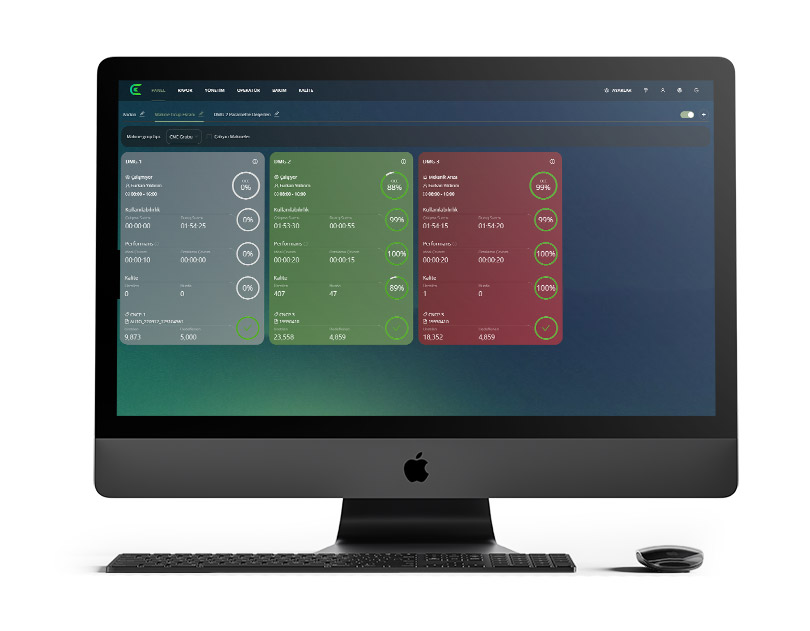
Advanced Machine Analytics
Solve Problems with Real-Time Data

CONDITIONAL MONITORING
View and manage the conditions and health of your machine assets; and also view and export the real-time machine data and alarms as time series data and charts to determine and solve the problems.

REMOTE SERVICE
Share your machine’s data with service provider instantly to provide the remote service and get your machines online more faster.

ALARM AND WARNING METHOD
Warn to the right person at the right time when the action has to be taken. . Observe the situations with the reappointments, analysis, fully audit tracking and workflow.

ALARM ANALYSIS
Determine with the alarm summary which alarms cause the most stoppage in your workshop.

PREVENTIVE MAINTENANCE
Create workflows which manage the preventive maintenance from the machine boundaries in your CMMS based on calendar and uptime.
QUALITY CERTIFICATES
ISO 9001: 2015
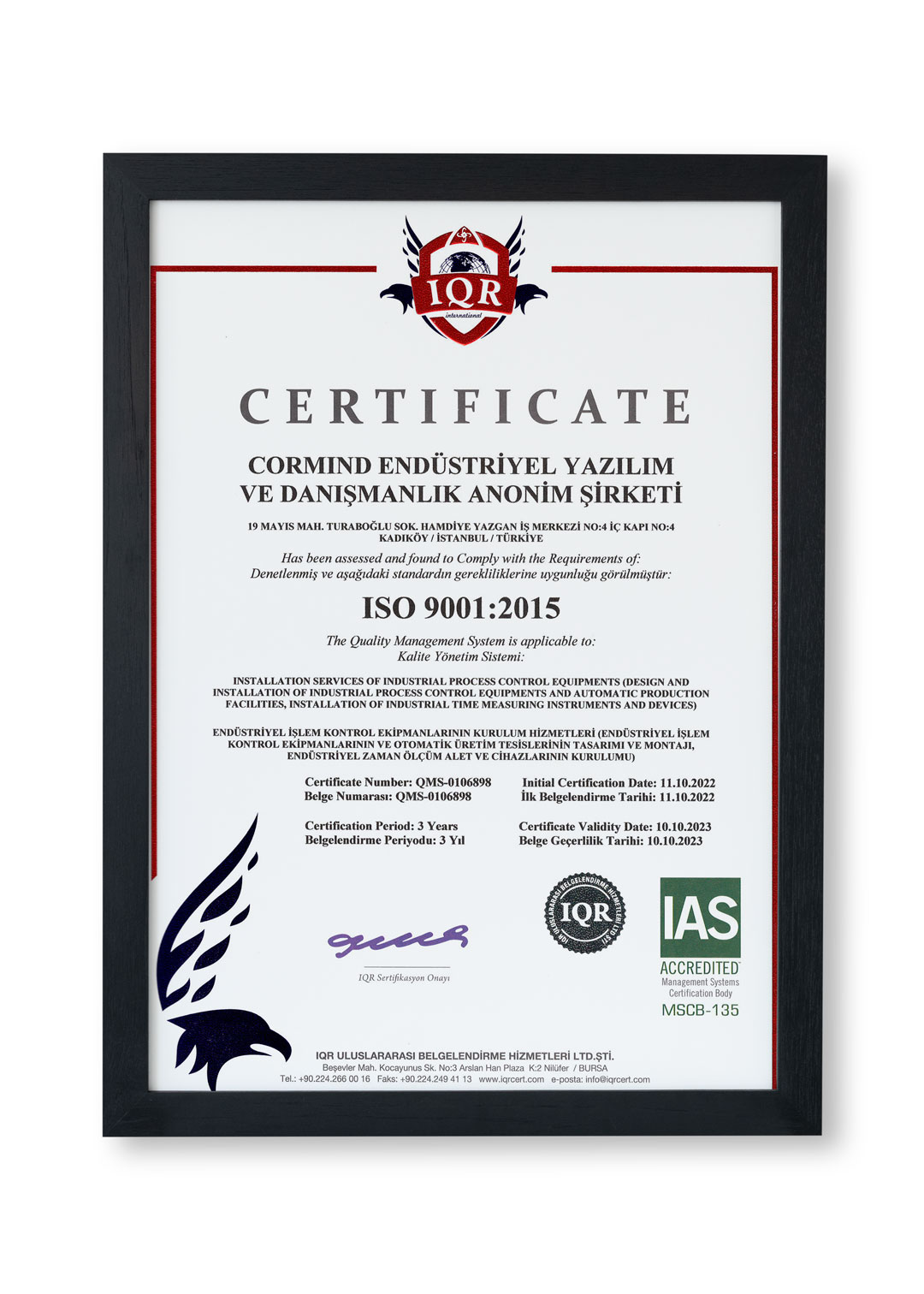
ISO 10002: 2018
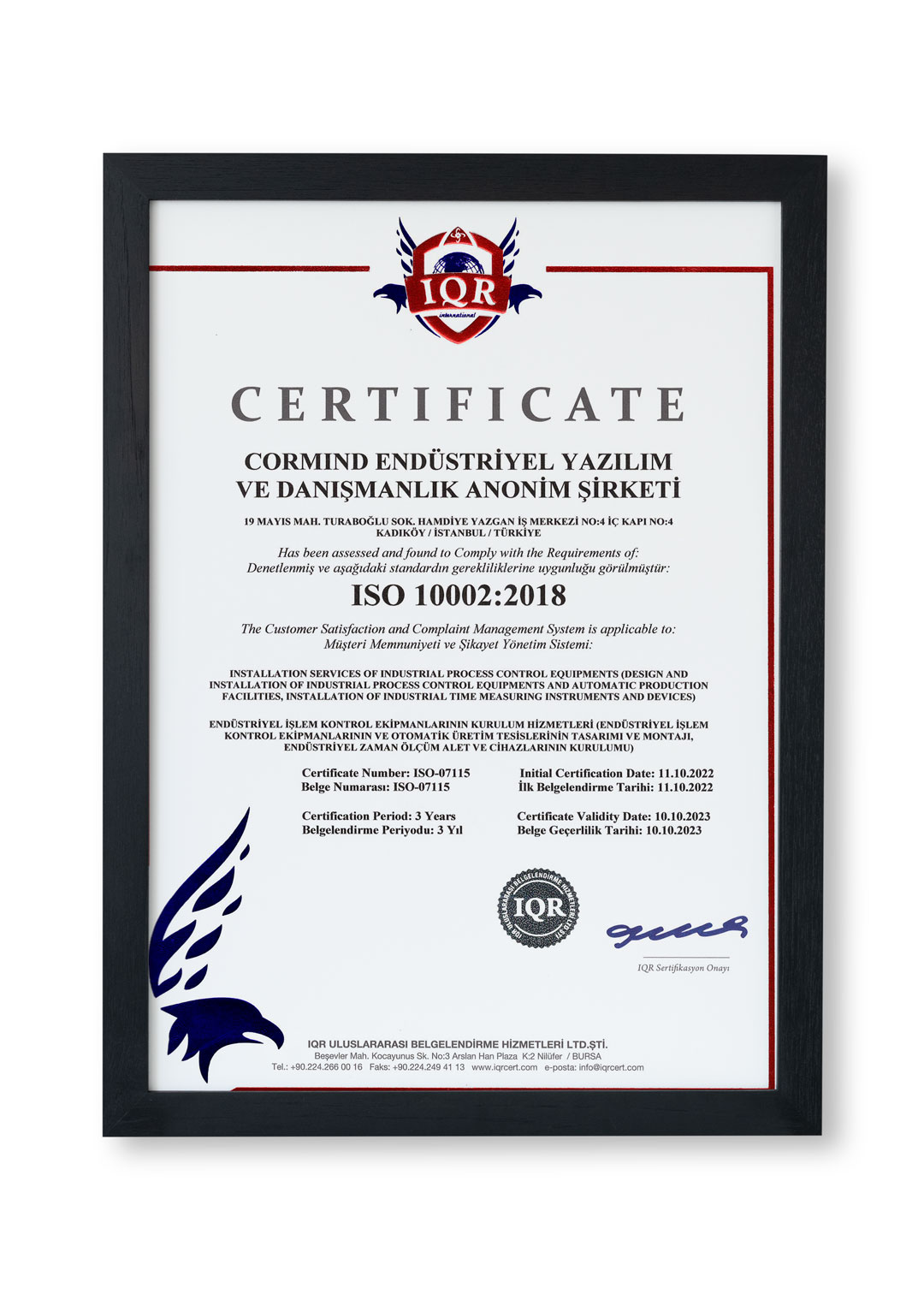
ISO 14001: 2015

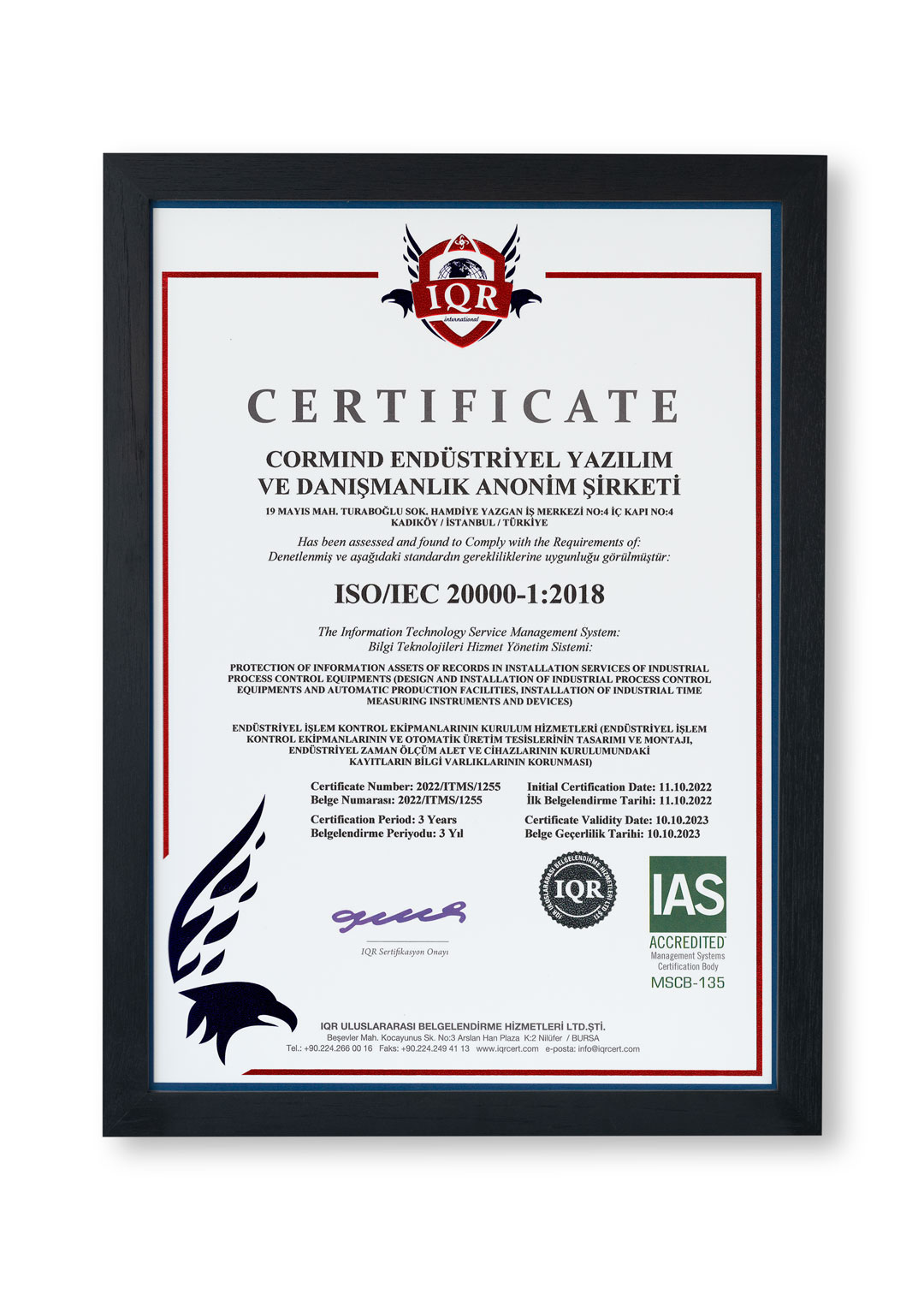
ISO/TEC 20000-1: 2018
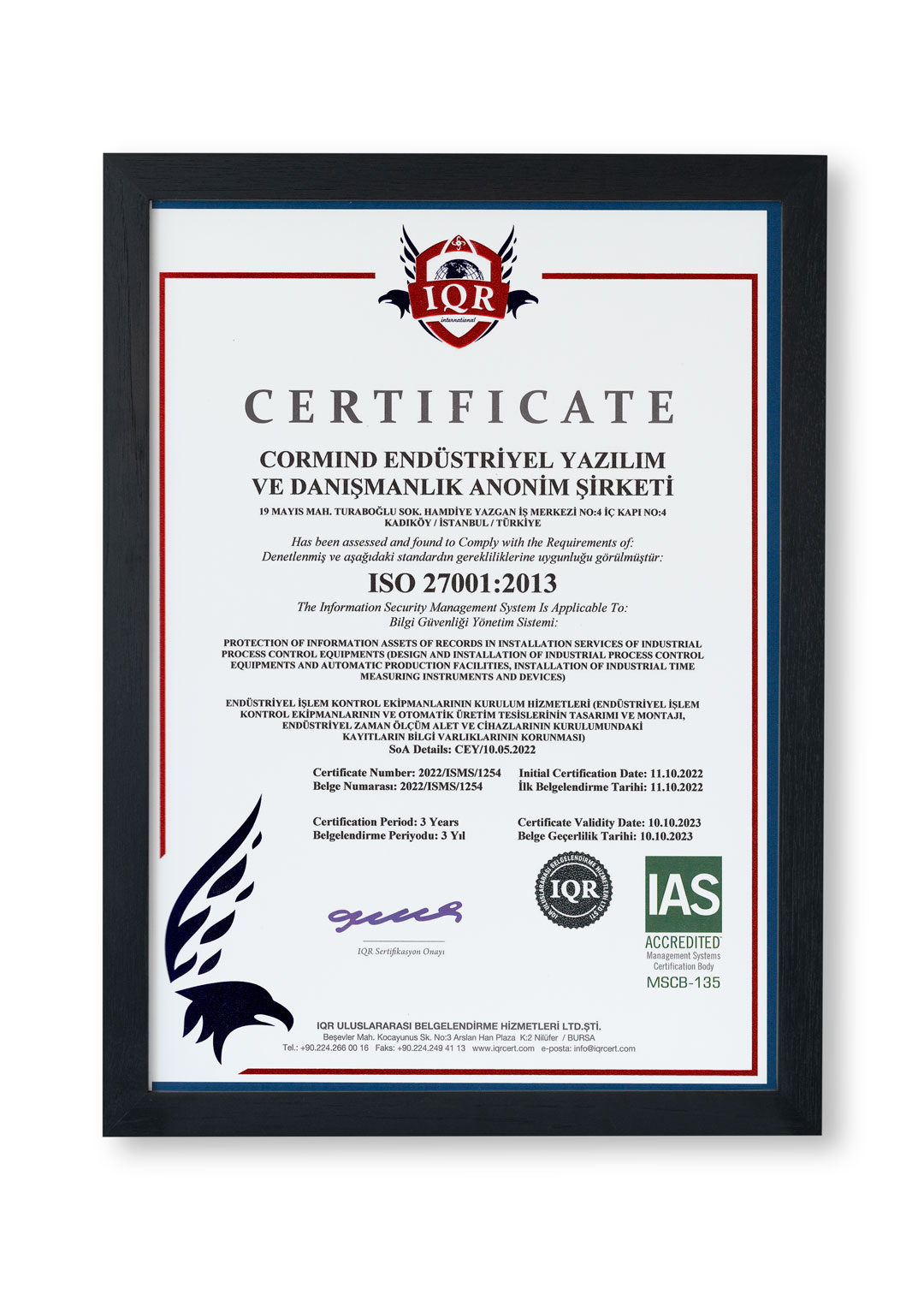
ISO 27001: 2013
TS EN ISO 56002


Are You Ready to Open Pandora’s Box for Your Business?

Frequently Asked Questions
What is Production Status Analysis?
Production status analysis is a systematic examination conducted to increase efficiency, reduce costs, and improve production processes. This analysis covers critical areas such as machines, workforce, process management, and inventory control. The goal is to evaluate all operations occurring on the production line with measurable data and to clearly reveal the strengths and weaknesses of the business.
Status analysis not only helps to understand the current situation but also to foresee potential future problems. This way, businesses can identify bottlenecks in advance and take timely actions. As a result, the production process becomes smoother, costs decrease, and operational sustainability is ensured.
Key Components of Production Status Analysis
Certain components must be considered to successfully apply status analysis in production processes. These components cover a wide range from data collection to machine performance evaluation, workforce analysis, and process optimization.
Real-Time Production Data Collection
To make data-driven decisions, it is essential to collect accurate and real-time data from the production process. Real-time production data includes instantaneous information from machines, production lines, and the workforce. These data are automatically recorded via sensors, production tracking systems, and software.
These data are used to monitor critical parameters such as production speed, material usage, energy consumption, and production time. In this way, possible production disruptions are detected early, and rapid interventions are provided. Real-time tracking contributes to making production processes more transparent and controllable.
Machine and Equipment Performance Evaluation
Machine performance has a decisive impact on overall production efficiency. Metrics such as operating time, failure frequency, maintenance needs, and energy consumption should be monitored regularly.
Machines operating at low efficiency can be identified, and maintenance or improvement planning can be conducted. In this way, both the lifespan of the machine is extended, and unplanned downtimes are reduced.
For example, in the automotive sector, vibration data of CNC machines can be analyzed to predict failure risks. When an increase in vibration is detected, the system automatically creates a maintenance alert. Thus, intervention can be made without stopping the production line.
Operator Efficiency and Workforce Analysis
The human factor in production plays an equally important role as machines. Measuring the performance of employees is one of the ways to increase overall production efficiency. Workforce analysis measures the contribution of employees to production and determines in which processes they work more efficiently.
The working speed of operators, error rates, and their compliance with production processes should be regularly evaluated. Based on these analyses, training needs can be identified, task distribution can be reorganized, and working conditions can be improved to increase employee efficiency. As a result, both employee satisfaction and production output are improved.
Monitoring and Optimization of Production Processes
Continuous monitoring of processes is vital for eliminating bottlenecks and using resources more efficiently. Detailed analysis of each step on the production line helps identify points that cause workflow blockages.
With improved processes, production time is shortened, resource waste is prevented, and overall production capacity is increased.
Example: In the food production sector, sensors are used to identify bottlenecks in the production line. In a chocolate production line, delays in the packaging process are analyzed, and workforce planning is revised. As a result, production time is shortened by 20%.
Analysis of Production Errors and Downtime Causes
Errors and downtimes during production lead to time loss and increased costs. Therefore, the reasons for each downtime and error must be analyzed in detail.
Unplanned downtimes usually arise from equipment failures, incorrect operations, or material shortages. To prevent these, a regular maintenance schedule and strong inventory management are necessary. Production errors mostly result from human errors, equipment problems, or process deficiencies. Insights gained from these errors can be used for process improvements.
Applications of Production Status Analysis
Status analysis has a wide range of applications across different production models and sectors. Depending on the production model, different focal points may come to the fore, allowing analysis processes to be applied flexibly.
Capacity Utilization Assessment in Mass Production
For companies engaged in mass production, capacity utilization is one of the most important performance indicators. With status analysis, the current production capacity is measured, and how effectively it is used is determined.
If capacity utilization rates decrease, bottlenecks and inefficient processes are identified, and solutions are developed. These processes are optimized to ensure the production line operates at full capacity, thereby reducing production costs and increasing efficiency.
Tracking of Make-to-Order Production Processes
Process tracking is critical for companies engaged in make-to-order production. Since production is based on customer demands, each order must be carefully monitored and completed on time.
Status analysis ensures effective tracking of each stage in order-based production. This ensures timely delivery of orders and increases customer satisfaction.
Quality Control and Product Compliance Analysis
In production, quality control is applied to determine whether products meet specified standards. Status analysis plays a critical role in the quality control process and monitors the compliance of each product with quality standards.
This analysis detects potential product defects and supports quality improvement efforts. Product compliance analyses reduce customer complaints and strengthen brand image.
Examination of Raw Material Usage and Scrap Rates
Raw material usage and scrap rates are factors that directly affect production costs. Status analysis examines the amount of raw material used in the production process and the resulting scrap rates to offer efficiency-enhancing solutions.
These analyses optimize raw material usage and reduce scrap rates to minimize costs. At the same time, preventing resource waste supports environmental sustainability.
Identification of Causes of Planned and Unplanned Downtimes
The reasons for downtimes occurring in production processes should be analyzed in detail. By identifying the causes of planned and unplanned downtimes, production continuity can be ensured.
Preventive maintenance and continuous monitoring systems can be activated to prevent unplanned downtimes. This ensures uninterrupted production processes and increases overall business efficiency.
Integration of Production Status Analysis with Factory Operating Systems
To effectively carry out production status analysis, integration with digital systems is of great importance. This integration ensures faster collection and analysis of production data.
Production Data Analysis with MES and ERP Systems
Manufacturing Execution System (MES) and Enterprise Resource Planning (ERP) systems enable digital tracking of the production process. These systems allow real-time analysis of data collected on the production line and process optimization.
MES and ERP integration ensures more effective management of critical areas such as inventory management, production planning, and workforce management.
Real-Time Production Monitoring with IoT Sensors
IoT sensors are used to collect real-time data from machines and the production line. These sensors transmit real-time data such as temperature, pressure, speed, and vibration in the production process, enabling more effective monitoring of processes.
With this system, problems on the production line are instantly detected, and response time is shortened.
Process Optimization with Automation Systems
Automation systems ensure the fast and error-free completion of production processes. Status analysis measures the performance of these systems and contributes to making processes more efficient.
Through process optimization, production costs decrease, and product quality increases.
Big Data Analytics and Predictive Decision-Making
Big data analytics enables the analysis of large volumes of data collected from production processes. Through these analyses, potential future problems can be predicted in advance, and preventive measures can be taken.
This enables faster and more accurate decision-making processes.
Advantages and Benefits of Production Status Analysis
Status analysis provides many advantages to businesses in production processes. It offers benefits such as increased efficiency, reduced costs, improved quality control processes, and greater transparency in production processes. Additionally, integrating analyzed data into long-term strategic planning helps businesses gain a competitive advantage in the market.
Efficiency Increase in the Production Process
By analyzing the entire production line, bottlenecks are identified, and processes are optimized. Unnecessary waiting times, material flow disruptions, and irregularities in production are eliminated, making the process more fluid.
With real-time data tracking, potential problems are instantly detected, and rapid interventions ensure production continuity. Thus, both machines and employees can work efficiently at maximum capacity.
Cost Reduction and Resource Use Optimization
By optimizing the use of raw materials, energy, and labor, production costs are reduced. This allows resources to be used more efficiently. Excesses in energy consumption are identified, enabling higher production capacity at lower costs.
At the same time, reducing scrap rates decreases raw material waste and contributes to the understanding of sustainable production. This process not only reduces costs but also minimizes environmental impact, supporting sustainable production policies.
Quality Improvement and Reduction of Error Rates
Thanks to quality control processes, preventive interventions are increased, minimizing error rates in production. Thus, customer expectations are met in the best possible way. The types of errors occurring during production are identified, their sources analyzed, and improvement processes initiated. Sensor-based quality control systems and automatic error detection mechanisms instantly detect errors during production and prevent defective products from reaching the market. This preserves customer trust and strengthens brand reputation.
Increased Accuracy in Production Planning
With data analysis, production planning can be done more accurately and effectively. Thanks to real-time monitoring, production becomes more flexible by responding instantly to changes in demand.
Improvement of Breakdown and Maintenance Management
Maintenance and repair processes of machines are planned more effectively to ensure production continuity and reduce failure rates. With predictive maintenance methods, when machines need maintenance is determined in advance, minimizing unplanned downtime. In addition, maintenance processes are optimized to reduce maintenance costs and extend equipment lifespan.