


Predictive Maintenance
Build up to your analytic applications for the confirmation, prevention and estimation of the malfunction of your production equipments with the high frequency machine’s data. No sensor required.


CONNECT TO MACHINES QUICKLY
Connect, collect and visualize the high frequency data from the workshop’s equipment.

PREDICT MACHINE PROBLEMS
Benefit from the analyzed datas to generate the predictive algorithms and workflows.

COMPLETE INSTALLATION QUICKLY
Offer the customized or ready for the using applications which prevent the problems before they do not occurs.
UNEXPECTED SITUATIONS CREATE SERIOUS COSTS
Unexpected part failures become scrap..Machine load, torque, acceleration and spindle abnormalities can be caused the production of the parts with unnecessary tolerances. All these lead to you the time and money.
Monitor the real-time machine’s conditions to prevent the unexpected, costly breakdowns and its durations for the interference at the right time.
Solution:
ESTIMATE THE PROBLEM WHICH CAUSES THE STOPPAGE

Use Cormind’s Predictive Modules
Cormind creates the algorithms which estimate the data scientists’ quality faults and extent the tools’ lifetime by connecting to the thousands of the machine tools. Machine tools operators label the data by using the operator’s interface when the tools failures or quality faults occur. Our ML/AI Algorithms percieve the collected datas and patterns which predict the problems before happening and stop the machine.

CRITICAL EQUIPMENT MONITORING
Determine the time of the equipments’ first stress fractures and warn to the operators for the deactivation before malfunctions or breaking.

OPTIMIZE CRITICAL EQUIPMENT USES
Determine the increasement of equipment’s abrasion beacuse of the material, environment and differences of the cutting, and that allows to run the equipments at the full capacity.

CAPTURE QUALITY PROBLEMS INSTANTLY WITH ALARM
Reduce the quality problems with the perception of the equipments’ irregularities and problems.

PREDICTIVE MAINTENANCE
Build up to your analytic applications for the confirmation, prevention and estimation of the malfunction of your production equipments with the high frequency machine’s data.
QUALITY CERTIFICATES
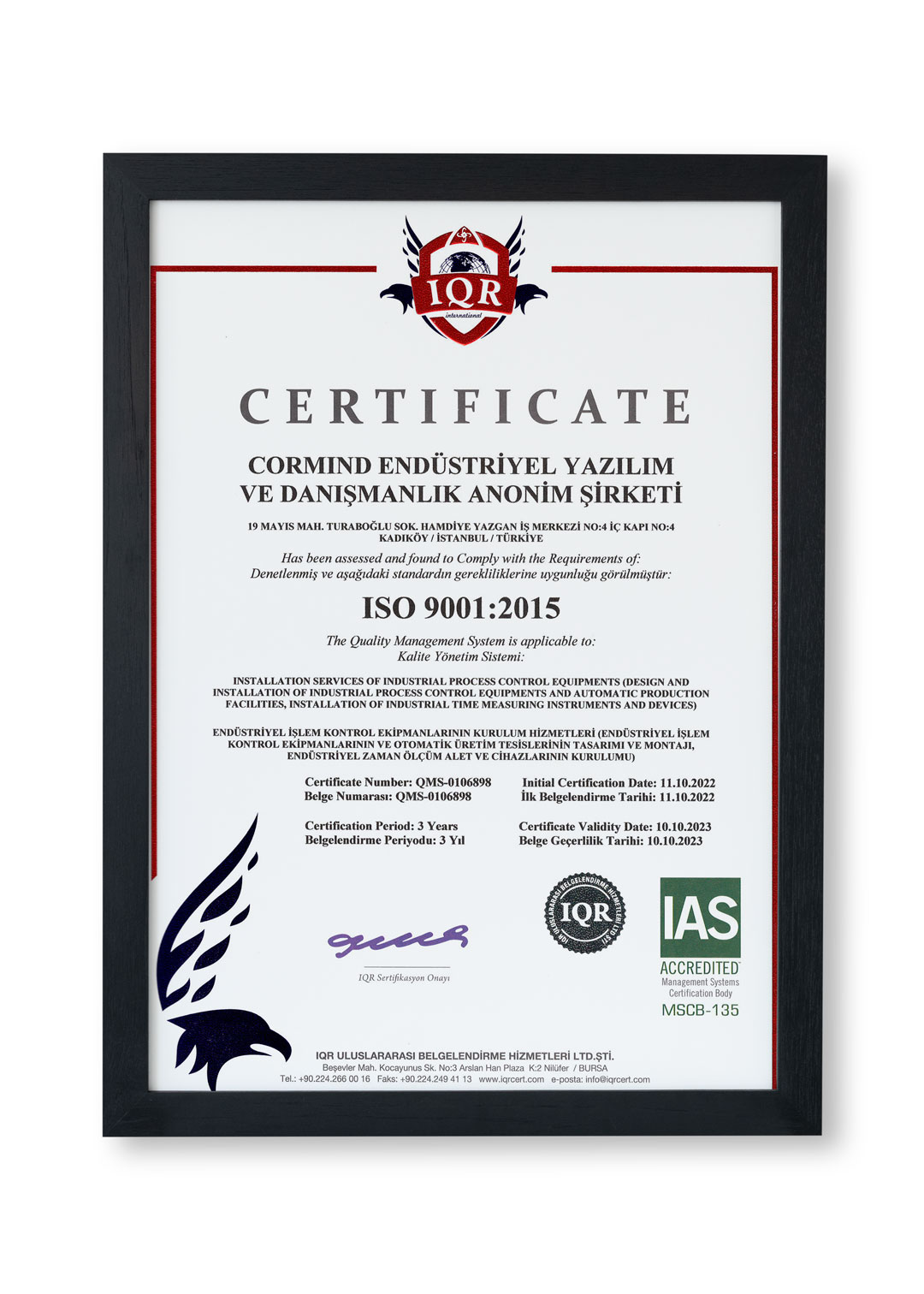
ISO 9001: 2015
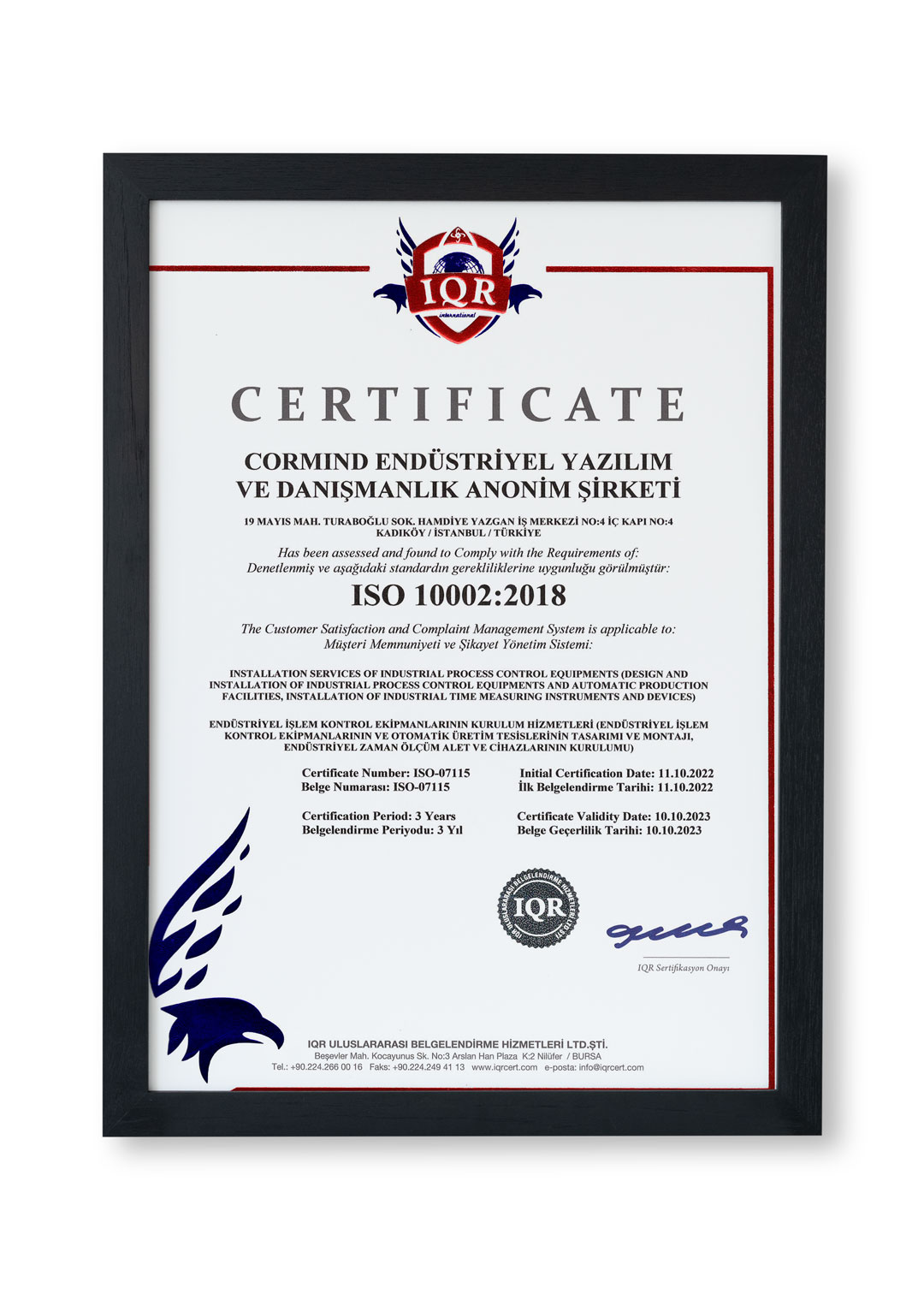
ISO 10002: 2018
ISO 14001: 2015

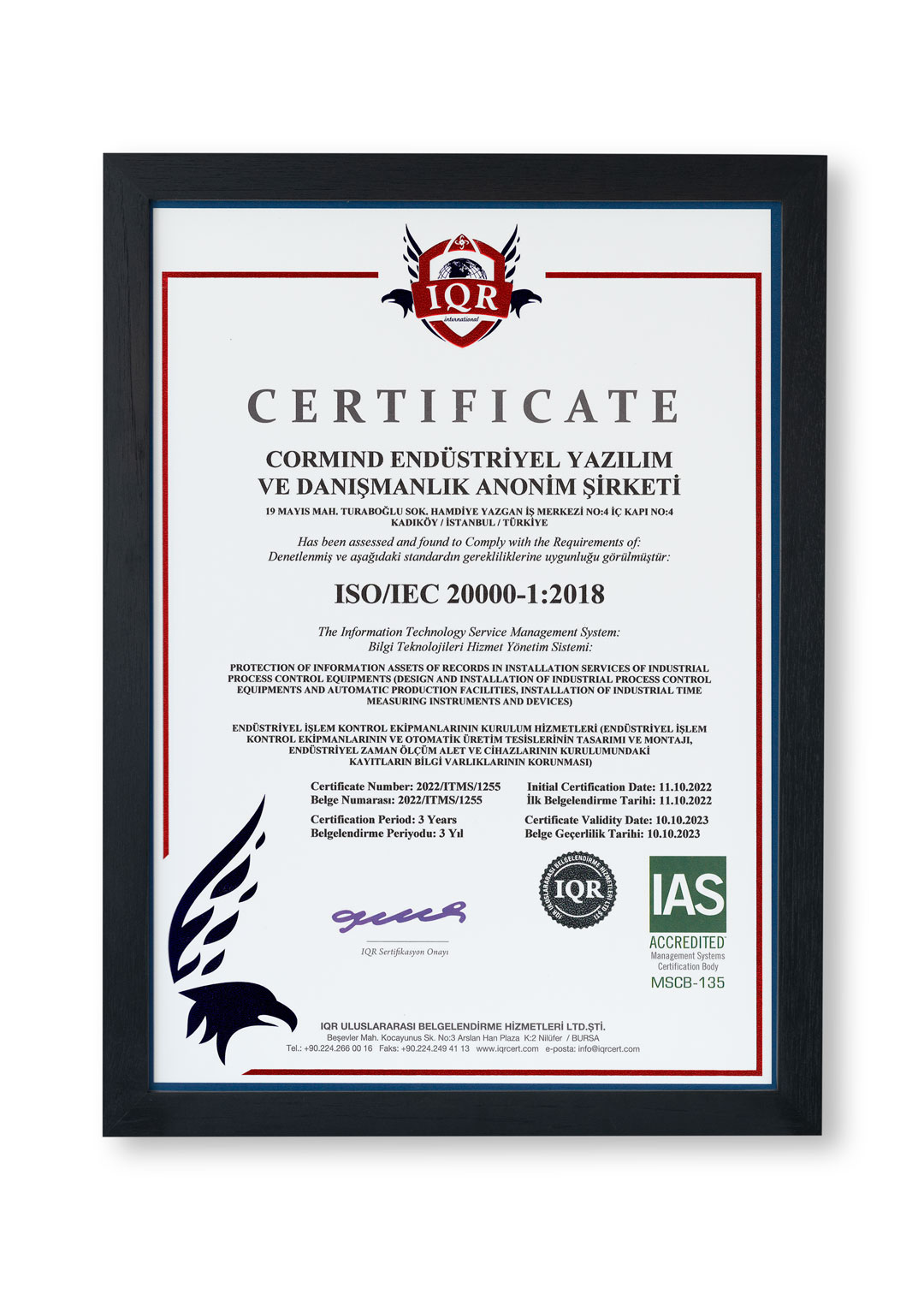
ISO/TEC 20000-1: 2018
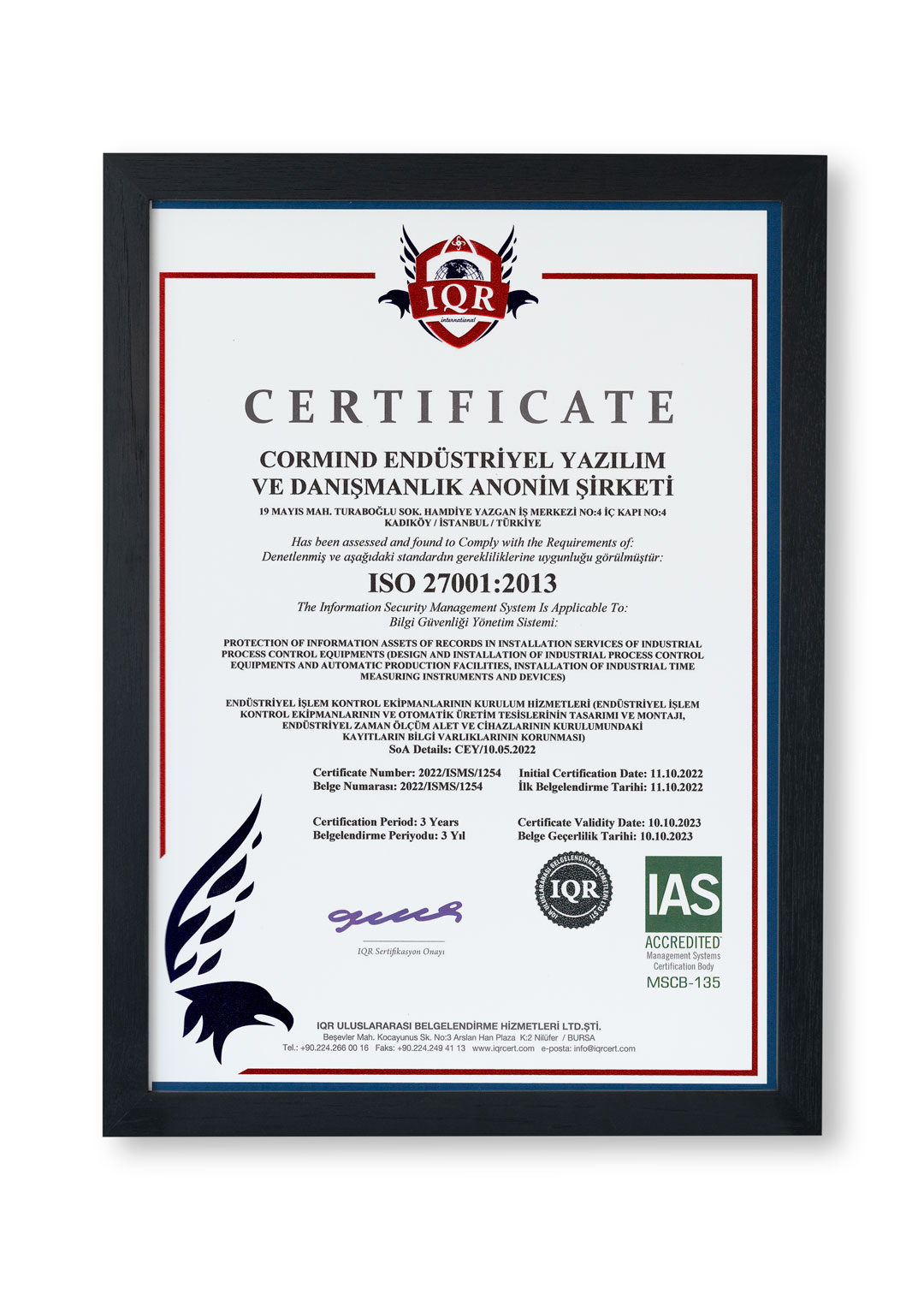
ISO 27001: 2013
TS EN ISO 56002


Are You Ready to Open Pandora’s Box for Your Business?

Frequently Asked Questions
What is Predictive Maintenance?
Predictive maintenance is a smart maintenance strategy focused on continuously monitoring machine performance to predict potential failures in advance and take timely preventive actions. Its primary goal is to detect equipment failures before they occur and ensure uninterrupted production.
In large production facilities and heavy industries, a machine failure can affect not only the equipment itself but the entire production line. Predictive maintenance reduces such risks while lowering costs and increasing operational efficiency.
Key Components of Predictive Maintenance
The success of predictive maintenance is made possible by advanced technologies and intelligent systems. So, what are the building blocks of this process?
Sensor-Based Real-Time Data Collection
The first step of predictive maintenance involves real-time monitoring of equipment conditions. This is where sensors come into play. Sensors collect various data such as temperature, vibration, pressure, and humidity, enabling continuous health checks of the equipment. These data are instantly analyzed to detect early signs of potential failures.
Fault Prediction with Artificial Intelligence and Machine Learning
The most critical stage of predictive maintenance is interpreting the collected data to make forward-looking predictions. This is where artificial intelligence (AI) and machine learning (ML) step in. These technologies analyze past failure data to calculate the likelihood of a particular equipment failing. As a result, maintenance teams can intervene at the right time and prevent potential production interruptions.
Big Data and Analytical Models
Big data analytics plays a crucial role in production processes; it processes large volumes of data from machines to identify potential risk factors and develop preventive measures. It also provides valuable insights for developing long-term maintenance strategies.
Analytical models optimize maintenance processes by considering equipment usage intensity, working hours, and past failure records in the production facility. This process not only analyzes the current state but also predicts future potential failures.
Equipment Health Monitoring with IoT
The Internet of Things (IoT) enables machines and systems to work in an interconnected environment. IoT sensors collect operational data from machines in real time and transmit it to a central platform for analysis. This allows for instant monitoring of equipment health.
For example:
- Data collected from machines on the production line is stored and analyzed on a central cloud platform.
- With real-time data, operators can remotely monitor the current state of the machines.
- When abnormal conditions are detected, the system can automatically issue alerts.
This setup allows production processes to run more flexibly and continuously.
Simulation and Prediction with Digital Twin
Digital twin technology allows the creation of a virtual copy of physical assets and production processes, enabling simulation in digital environments. This way, machine working conditions can be modeled as realistically as possible, and different scenarios can be tested to develop preventive solutions against potential failures. Through these simulations:
- Equipment performance can be tested under various conditions.
- Failure probabilities can be calculated in advance, and preventive actions can be taken.
- Costly and time-consuming physical tests are avoided.
Applications of Predictive Maintenance in Industry
Predictive maintenance is used in various ways across different sectors. From industrial manufacturing to the energy sector, it increases efficiency and reduces costs.
Monitoring Machine Performance on Production Lines
Continuous monitoring of machines in industrial manufacturing facilities enhances production efficiency. This monitoring process optimizes production line performance and ensures production continuity. In some cases, predictive maintenance applications can automatically detect early failure signs and instantly notify maintenance teams.
Energy Consumption and Efficiency Management
In large production facilities, energy costs represent a significant budget item. Predictive maintenance detects anomalies in machine energy consumption, enabling more efficient usage. This helps utilize energy resources more effectively and supports businesses in achieving their sustainability goals.
Failure Prevention with Planned Maintenance Strategies
While traditional planned maintenance is performed at set intervals, predictive maintenance determines maintenance needs through real-time data and intervenes only when necessary. This reduces unnecessary maintenance processes, saving time and costs.
Use Cases in Automotive, Aviation, and Heavy Industry
In these sectors, machine failures can pose not only financial but also safety risks. Predictive maintenance is vital in such industries. For example, early-detected faults in aircraft engines, automotive production lines, or heavy industrial machinery can prevent critical accidents.
Reducing Maintenance Costs and Enhancing Operational Efficiency
This approach not only reduces costs but also contributes to the efficient use of labor and prevents spare part wastage. Additionally, by maximizing equipment uptime, production efficiency is increased.
Advantages and Benefits of Predictive Maintenance
The benefits of predictive maintenance go beyond just preventing failures. This strategy makes production processes more efficient and sustainable overall.
Preventing Unexpected Failures and Reducing Production Losses
An unexpected failure during production can cause operational disruptions and increased costs. Predictive maintenance prevents such issues by ensuring systems operate continuously.
More Effective Management of Maintenance Processes
Unnecessary maintenance processes can be a significant burden in terms of time and cost. With predictive maintenance, maintenance is performed only when needed, leading to more efficient process management.
Extending Equipment Lifespan
Timely interventions allow equipment to operate smoothly for longer periods. This reduces equipment replacement costs and shortens the return on investment period.
Increasing Production Continuity and Efficiency
Potential disruptions in production processes are minimized through predictive maintenance, enabling companies to enhance operational efficiency and gain competitive advantage.
What is Predictive Quality?
Predictive quality is a proactive approach that continuously improves quality standards by identifying potential errors during production. Unlike traditional quality control methods, predictive quality is a proactive method. Using real-time data, artificial intelligence, and analytical technologies, potential errors in the production process are predicted in advance.
This approach minimizes the risk of faulty products reaching customers and continuously optimizes the quality of production processes.
Key Components of Predictive Quality
Predictive quality applications rely on a range of components supported by advanced technologies. The key elements of this process include:
Real-Time Quality Analysis in the Production Process
Thanks to sensors and data collection tools, quality is continuously monitored during production. Real-time analyses immediately detect any product quality issues and enable necessary measures to be taken.
Defect Detection with Image Processing and Sensor Technologies
Especially on production lines, image processing technologies can detect even the smallest surface defects in products. Working in conjunction with sensors, they quickly identify defective products.
Proactive Quality Control with Artificial Intelligence
AI systems that analyze historical fault data can predict potential future problems and provide early warnings to maintenance teams. This allows quality control teams to optimize the production process in advance.
Predicting Production Errors with Big Data
Big data collected from production processes is processed through detailed analyses to anticipate quality issues. This contributes to a more efficient and error-free production process.
Quality Simulations with Digital Twin
Digital twin technology creates a digital replica of the production process, enabling simulation of various scenarios. Thus, potential quality problems can be identified even before production starts.
Applications of Predictive Quality in Industry
Predictive quality makes quality control processes more effective across various industries.
Predicting Part Quality in Automotive
In the automotive sector, part quality is vital for vehicle safety. Predictive quality detects potential defects in parts during production and ensures product quality.
Monitoring Product Quality in the Food and Pharmaceutical Industries
In these sectors, product safety and quality standards are extremely important. Predictive quality ensures continuous monitoring of products throughout the production process, minimizing errors.
Defect Analysis in Textile and Plastic Manufacturing
Sensor and image processing systems on production lines enable quick detection of defects in the textile and plastic sectors. This prevents defective products from reaching the market.
PCB and Component Quality Management in Electronics Manufacturing
Even the smallest quality error in electronic products can lead to major issues. Predictive quality meticulously checks circuit boards and components during the production process.
Optimizing Process Quality in the Energy and Petrochemical Industries
Considering the complexity of production processes in these sectors, predictive quality enables process optimization, enhances efficiency, and maintains quality standards.
Advantages and Benefits of Predictive Quality
Predictive quality not only enhances quality in production processes but also reduces costs and provides a competitive edge.
Reducing Error Rates and Improving Quality
Identifying errors in advance reduces error rates in the production process and enables the production of higher-quality products. This allows for quality production at lower costs.
Increasing Speed, Accuracy, and Efficiency in Quality Control Processes
Thanks to automated systems, quality control processes are conducted faster and more accurately. This increases production speed while ensuring product quality. As a result, more efficient production is achieved, and higher customer satisfaction is ensured.
Customer Satisfaction, Brand Reliability, and Long-Term Loyalty
High-quality products enhance customer satisfaction and reinforce brand reliability. Over the long term, this helps build a loyal customer base and increases trust in the brand.
Cost Reduction and Environmental Sustainability
Reducing errors in the production process minimizes material waste and supports environmental sustainability. This lowers production costs and reduces environmental impact.
Predictive maintenance and predictive quality bring about a major transformation in industrial processes. In today’s production environment, these technologies have moved beyond being a preference they have become indispensable. In the future, with more advanced analytics and automation systems, these approaches will remain essential and continue to be key pillars of industrial innovation.