


Move to Real-Time
Instant Production Tracking
From Predictive Production Process
ONLY: 450 USD
Cormind – Sepex is an objective, reliable,prepared system that gives you real-time (yes, real-time) visibility into critical fields such as machine utilization and downtime; OEE, eliminates the bottlenecks quickly, increases capacity and maximizes efficiency.
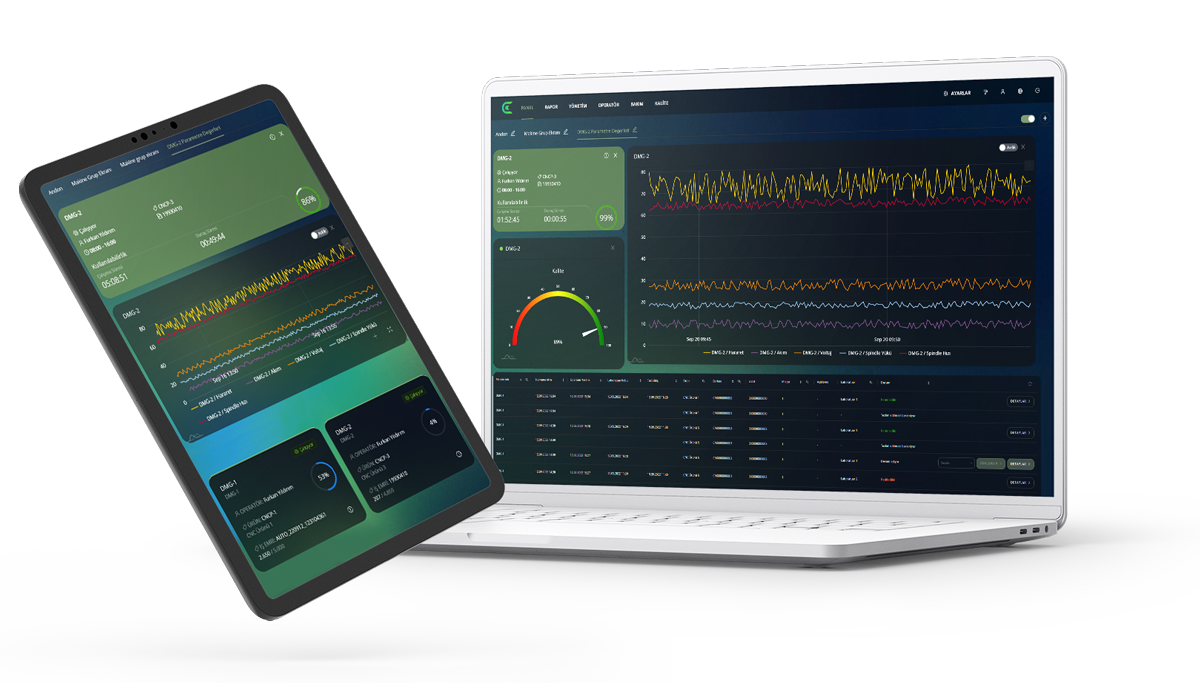
PRODUCTION MONITORING
PLUG & PLAY
GET FAST DATA
Cormind – Sepex has a cloud-based solution that enables to the fast “self-installing” machine connectivity and the access opportunity to comprehensive production data instantly. There is an easier way with The Cormind to enable that decision-makers take an action with the correct data.
ROI in
30
DAYS
Let Cormind – Sepex works for your factory. You take your actions. More than 10% increasement of production efficiency from the first months; obtains the investment return in a few weeks, not months or years.
HOW DOES IT WORK?
1. DATA COLLECTION
Collect, connect and contextualize the data automatically from the machines and operators.

2. ACCESS
Access to the comprehensive, real-time data securely – at the anytime and anywhere.
3. VISUALITION
Powerful data visualizations enable to solve the problems quickly in your production.
4. DATA ANALYSIS
Performing to the in-depth analysis of real-time and past data.

5. OPTIMIZE
Vision of the production data helps to the determination of the strategies to improve the operational efficiency and process changement.

6. GAIN EFFICIENCY
Operations can be monitored digitally under the control of operators, managers and supervisors with the vision data.
Your Process with Sepex
1. Real-time production:
Correct data with the fast and easy prepared dashboards and decision mechanisms
2. Detailed data analysis of production:
Calculation of the real lead-time on machine and product basis for long-term production processes
3. Optimize your production:
Control the production plan and capacity instantly after the comparison of the expected and incoming.
4. Reduce unexpected stoppage:
Controlling the instant alerts with their reasons and provide the increasement of the machine efficiency.
5. Follow-up of the whole production
Not only on the machine basis, Cormind – Sepex’s management of the whole flow increases the factory efficiency end-to-end.
6. Quality management:
Management of the all processes with end-to-end can be monitored instant and quality stages. In this way, the machine set up can be adjusted instantly if it is needed. So, the objective process is managed by eliminating the manual processes.
7. Direct Plug & Play access to machines:
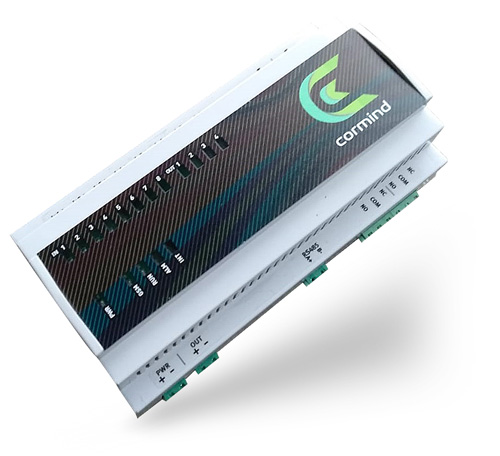
The most important abilitiy of the Cormind’s CPR Device is that the plug-and-play universal machine connectivity and the data collection from PLC’s supporting protocols which including MTConnect, Fanuc, OPC-UA, UMATI, Mitsubishi, Citizen, Haas, Heidenhain, Siemens Synumeric, Modbus and Ethernet IP. So, it supports the digital and the analog I/O to integration even the most tough equipment and the machines without standard connectivity options.
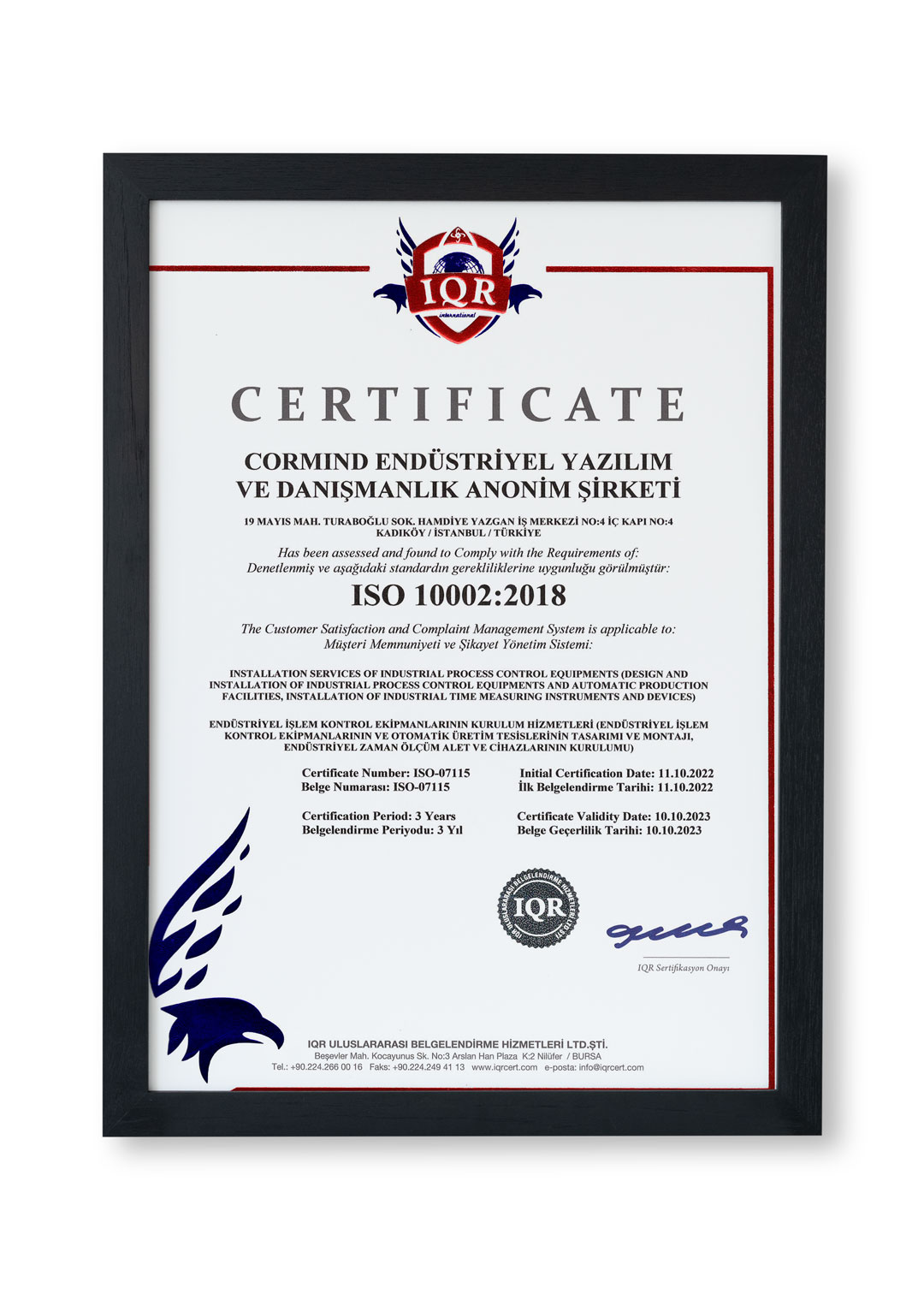
QUALITY CERTIFICATES
ISO 9001: 2015
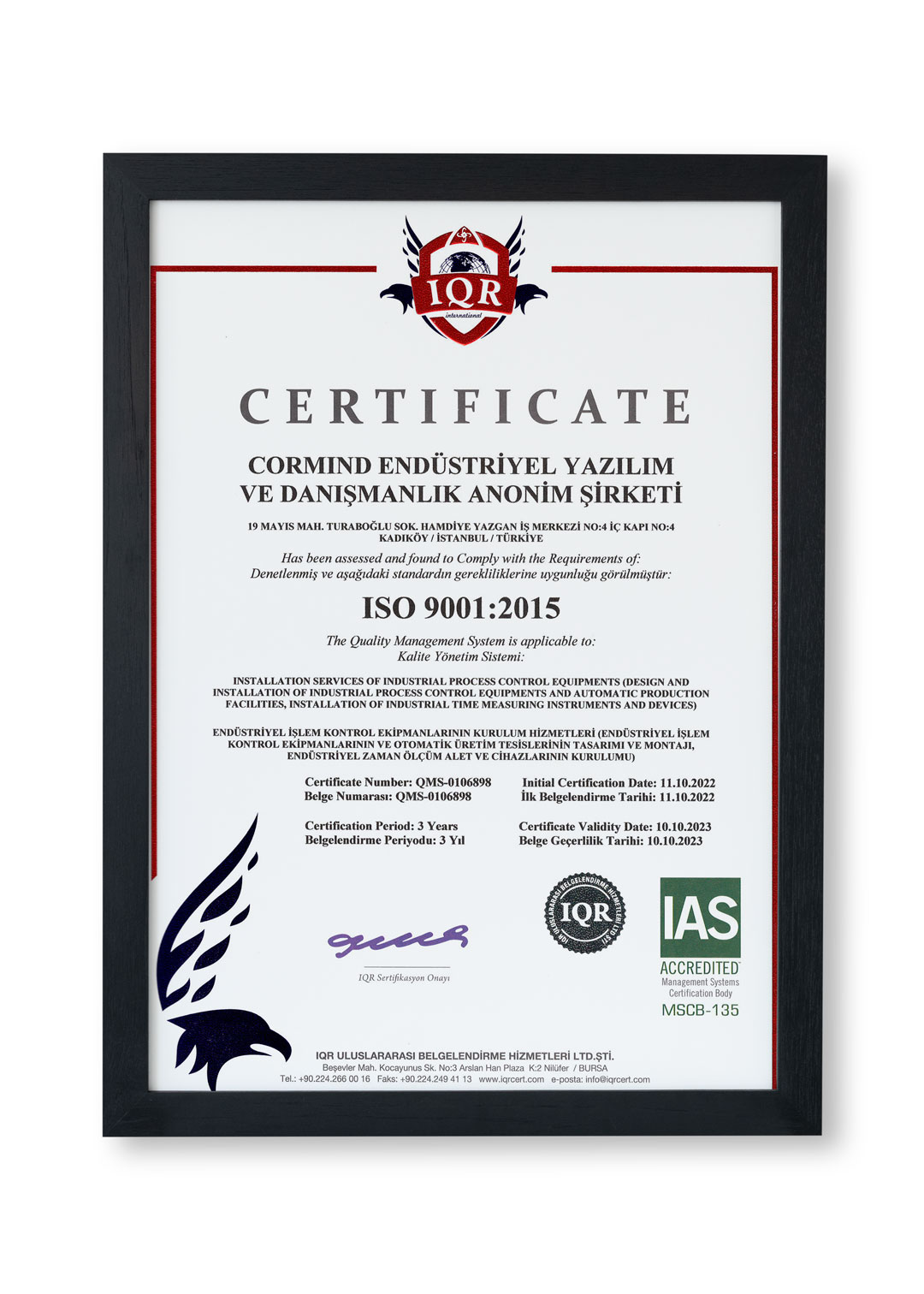
ISO 10002: 2018
ISO 14001: 2015

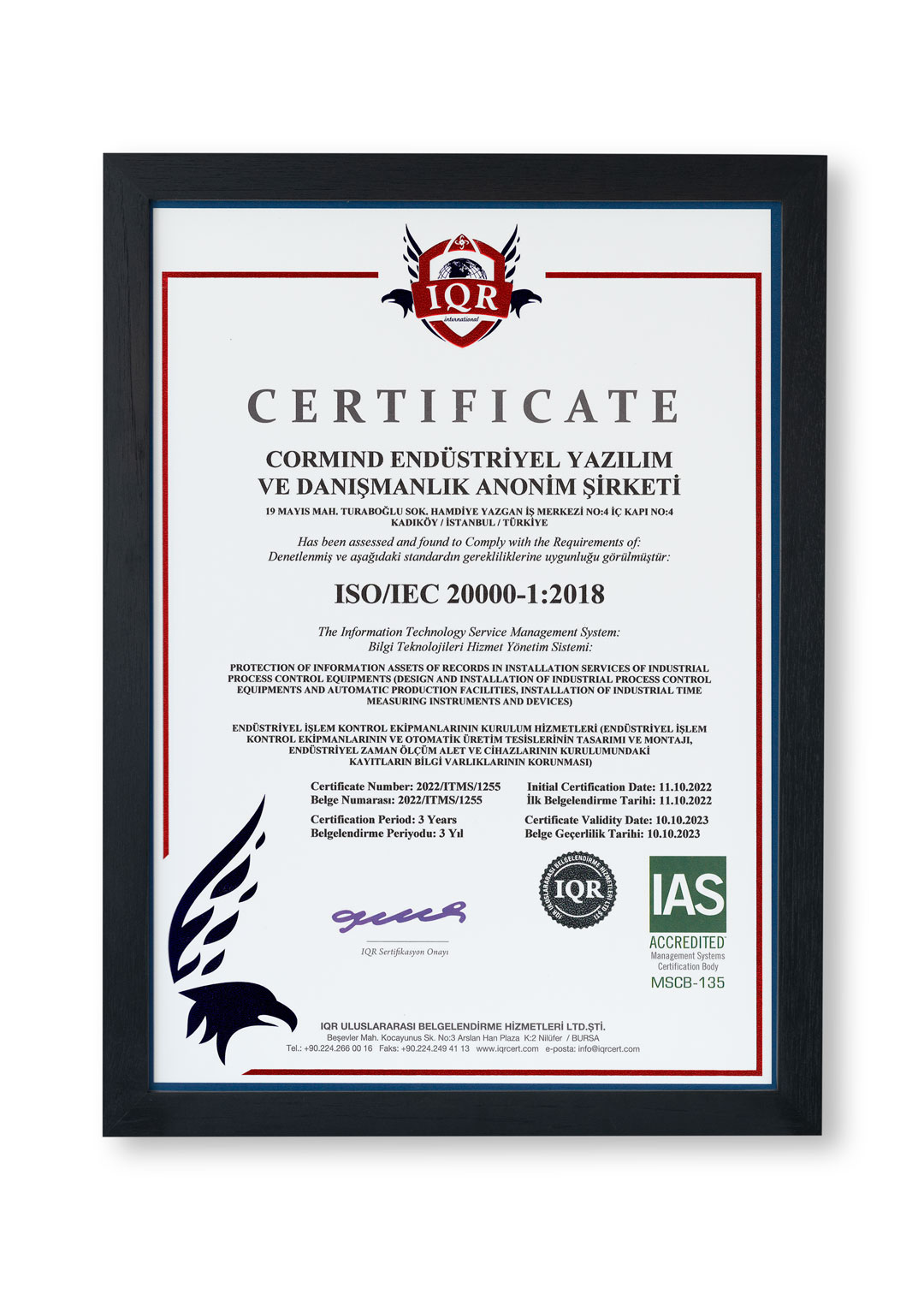
ISO/TEC 20000-1: 2018
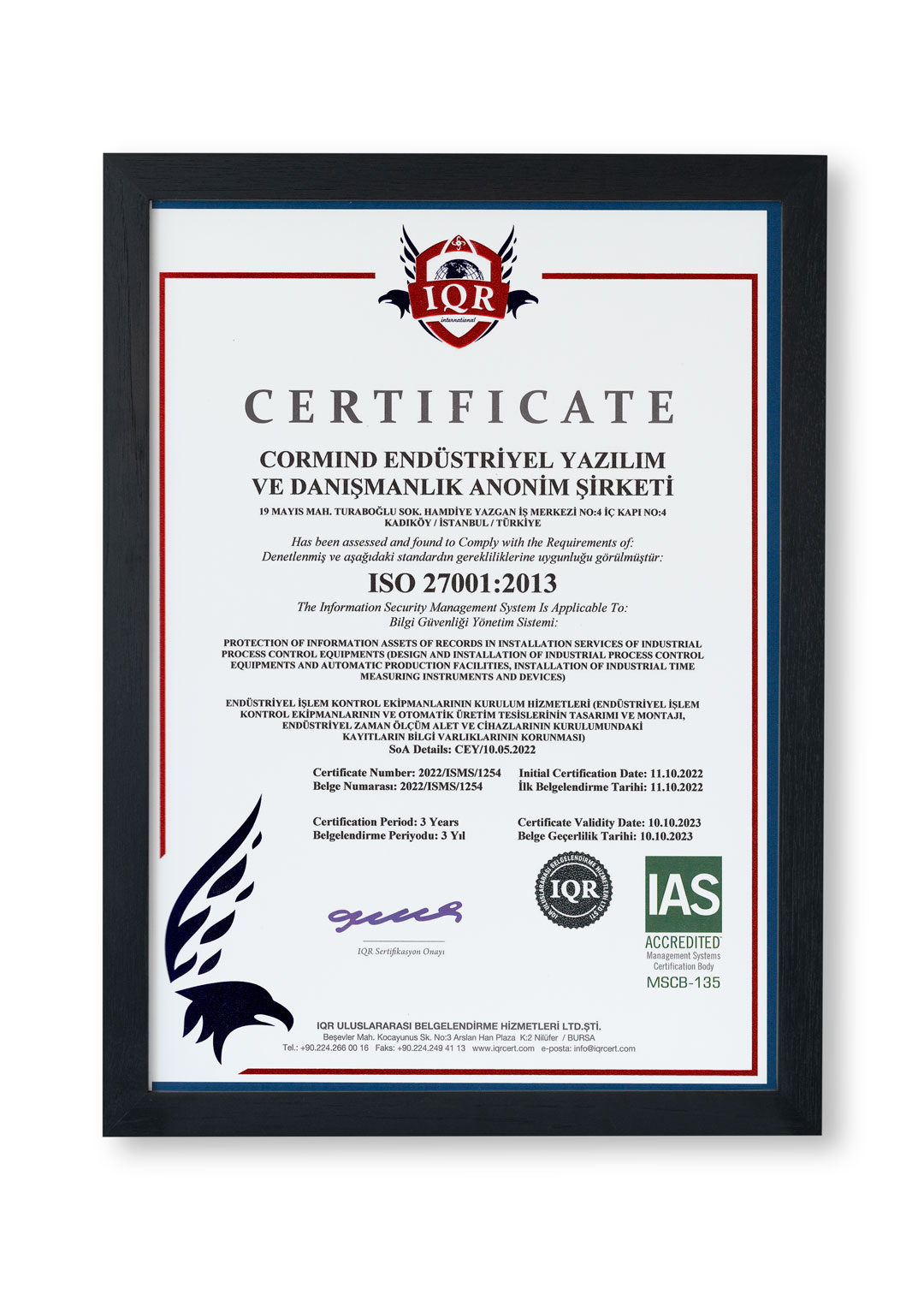
ISO 27001: 2013
TS EN ISO 56002


Are You Ready to Open Pandora’s Box for Your Business?
Frequently Asked Questions
What is a Production Tracking Program?
A production tracking program is a software-based solution that enables digital monitoring, management, and optimization of the entire production process, from raw material to the final product. These systems extend beyond the production line to integrate with processes such as supply chain, inventory control, maintenance planning, and workforce management.
With Industry 4.0 technologies, production tracking systems offer not only retrospective analysis but also real-time data tracking, instant intervention, and proactive decision-making capabilities. This allows businesses to build more flexible production structures, reduce costs, increase quality, and continuously improve efficiency.
The collected production data is supported by advanced analytical reports, making it easier for managers to better understand processes and make strategic decisions. Thanks to all these advantages, production tracking programs provide businesses with control, speed, and sustainability in their digitalization journey.
Key Components of Production Tracking Programs
For a production tracking program to function effectively, various components performing different functions must work in an integrated manner. These components are designed to monitor every stage of the production process, aiming to increase efficiency and prevent potential errors.
Real-Time Production Monitoring
One of the core features of production tracking programs is the ability to monitor all stages of the production process in real time. Data is continuously collected from machines, operators, and equipment; in case of any deviation or delay, the system automatically sends an alert. This allows quick intervention. This feature is especially critical for businesses with high-volume production as it reduces downtime and supports production continuity.
Machine and Operator Performance Analysis
The program helps improve production efficiency by analyzing the performance of both machines and workers. Maintenance needs can be identified in advance through data from machines, making planned maintenance processes more effective. Similarly, monitoring operator performance reveals training needs and enables more efficient use of human resources.
Product and Order Management
Production tracking systems make each stage of the order process visible by tracking the status of orders throughout production. Information such as when a product will be produced and shipped is updated in real-time. This enables healthier production planning and ensures on-time delivery, thus improving customer satisfaction.
Quality Control and Traceability
Quality management plays a critical role at every stage of production. The program detects potential errors during production early and ensures necessary actions are taken. With traceability, the production history of each product is recorded. This is indispensable in sectors such as food, pharmaceuticals, and automotive to maintain quality standards.
Inventory and Stock Management
Raw material, semi-finished, and finished product inventories can be monitored digitally. This ensures uninterrupted progress in the production process. Stock levels are updated in real-time, preventing unnecessary accumulation. The supply chain is managed more efficiently and systematically.
Industrial Applications of Production Tracking Programs
Production tracking programs are widely used in various sectors and production models. These customizable software solutions are developed to make production processes more efficient and controlled.
Mass Production and Assembly Line Management
In factories engaged in mass production, the production line is constantly monitored and optimized. Ensuring that each component reaches the right stage at the right time allows production to proceed without interruption. Bottlenecks are detected early and swiftly addressed.
Batch and Lot-Based Production Monitoring
In sectors like food, pharmaceuticals, and chemicals, tracking production by batch or lot is critically important. This system monitors every stage from production to shipment in detail. It ensures quality control and allows product recalls to be quickly initiated if necessary.
Predictive Maintenance and Fault Prevention
Production tracking programs analyze data from machines to detect possible malfunctions in advance. This enables continuous monitoring of machine performance and scheduled maintenance. Predictive maintenance applications reduce unexpected downtimes in production processes, cut costs, and increase efficiency.
Supply Chain and Logistics Integration
Production tracking programs integrated with supply chain processes optimize the flow of materials in production. Every stage of the supply chain is continuously monitored, stock levels are updated, and required raw materials are procured in time. This integration ensures continuity in production processes and enhances customer satisfaction.
Custom and Make-to-Order Production Management
Production tracking programs offer significant advantages for businesses engaged in make-to-order production. The production process is customized according to customer demands and monitored in detail at every step. This ensures that products meet customer expectations and are delivered on time.
Integration of Production Tracking Programs with Factory Operating Systems
Integrating production tracking programs with factory operating systems plays a critical role in increasing efficiency and speed in production processes. This integration allows the coordinated operation of other software used in production, enabling more effective management of processes.
Integration with ERP, MES, and IoT Systems
Production tracking programs are integrated with systems such as ERP (Enterprise Resource Planning), MES (Manufacturing Execution System), and IoT (Internet of Things), enabling all production processes to be managed from a single platform. ERP manages enterprise-level processes such as finance, human resources, and supply chain; MES controls operations on the production line; IoT devices collect real-time data from machines to continuously monitor production. The integration of these systems enables the automatic coordination of all processes and contributes to more efficient production.
Data Analytics and Reporting Solutions
Production tracking programs offer advanced analytics tools for analyzing and reporting collected data. Data from the production process is presented to businesses through visual reports and graphs, allowing better analysis of processes. These reports enable faster and more effective decision-making.
Automatic Process Optimization
Integrated production tracking programs continuously monitor production processes and automatically implement necessary changes to increase efficiency. This optimization process prevents disruptions in production and enables more efficient use of resources.
Mobile and Remote Access Solutions
With mobile devices and remote access systems, production processes can be monitored and managed from anywhere. Managers can follow developments on the production line in real time and intervene remotely when necessary.
Advantages and Benefits of Production Tracking Programs
Production tracking programs are digital solutions that enable businesses to manage their production processes more efficiently and effectively. These programs increase efficiency, reduce costs, improve quality, and enable flexible production planning by allowing production processes to be monitored digitally.
Increase in Production Efficiency
Production tracking systems continuously monitor the production line by collecting real-time data from machines and operators. Any slowdown, stoppage, or deviation is immediately reported by the system, allowing quick intervention. This ensures uninterrupted processes and a more fluid production. This tracking especially facilitates reaching daily production goals in shift-based operations.
Cost and Time Savings
Real-time tracking detects delays in advance and reduces time losses. Stock levels can be monitored in real-time, preventing overproduction and unnecessary stock accumulation.
With the predictive maintenance feature, machines’ service needs are identified early; this reduces unplanned downtimes. For example, the risk of failure in an injection molding machine can be detected early by analyzing its vibration or temperature data. This not only reduces maintenance costs but also prevents disruptions in the production schedule.
Reduction in Error Rates and Quality Improvement
Production tracking systems automate quality control processes, significantly reducing error rates. Quality deviations during production are instantly detected. Defective products are removed from the production line before reaching the final stage.
This reduces cost losses and ensures that more consistent products reach the end user. Especially in the automotive, pharmaceutical, and food sectors, this level of traceability also provides legal compliance advantages.
Agile Production and Flexible Planning
Market dynamics are constantly changing. Production tracking programs can instantly update production plans to respond quickly to changing customer demands.
The system can easily adapt to make-to-order or small-batch production. Additionally, thanks to supply chain integration, the entire process from raw material input to shipment progresses in a more planned and synchronized manner. This flexibility provides businesses with a competitive edge and shortens delivery times.