


Data Management for Continuous Improvement
Our powerful, intuitive and customizable production and process optimization applications are directed by the analitics to inform your teams what they need to know, how do they better and when exactly.


COLLECTING DATA
Connect, collect and visualize the real-time innervision from the system, employee or the any equipment on the shop floor.

BOTTLENECK ANALYSIS
Analyze the operation and process data for the determination of the unefficiency which affect the efficiency and profitability.

OPTIMIZE THE PROCESS
Create the optimized workflows with the applications and procedures to the factory workers.
PROCESS OPTIMIZATION
UNPRODUCTIVE PROCESSES ARE CAUSED UNPLANNED PROCESSES.
Working without the data leads to the process inefficiencies and poor decision-making which including the critical downtime and production losses.
Benefit from the data’s power to attach the human context to the machine data. Analyze and determine the process bottlenecks to offer to the factroy workers to the new and optimized processes at the correct time.
Solution:
OPTIMIZE THE PROCESSES WITH DATA.
DATA COLLECTION
Connect, collect and visualize the real-time innervision from the system, employee or the any equipment on the shop floor.

OPERATOR FEEDBACK
Optimize the process with detailed information from the operator.

DESIGN THE PROCESS
Improve the equipment’s working hoursand service productivity by avoiding to the unplanned downtime.
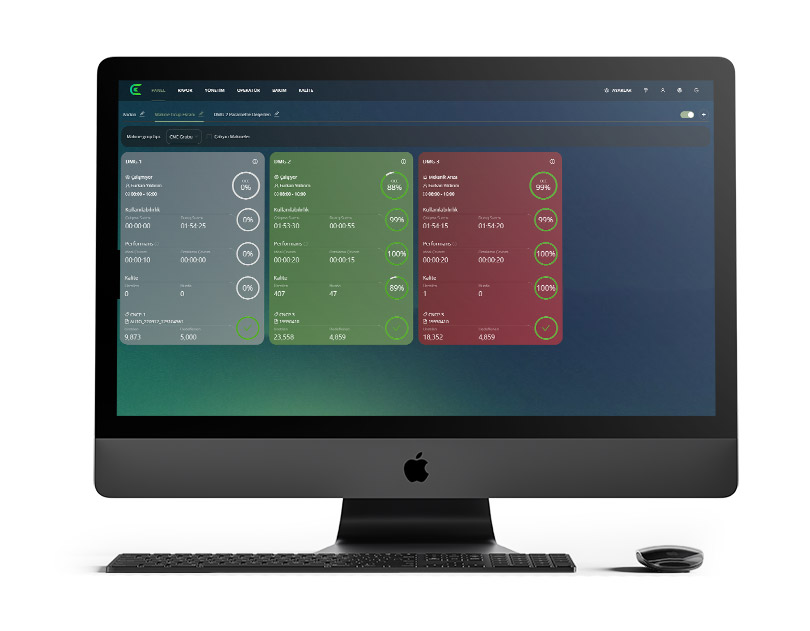
Discover the Bottleneck in the Process
Improve the processes with the automatic cloud machine monitoring and OEE software to visualize the real-time production data.

CIRCUIT TIME ANALYSIS
Monitor the spindle load or another analog metric during a part cycle. Overlap multiple cycles to analyze the inconsistencies or changes in over time.
PRODUCTION BOTTLENECK ANALYSIS
Follow the process with operator’s feedbacks to determine the costly bottlenecks, you can educate again and offer the better and more efficiency options.

QUALITY ANALYSIS
Determine the production process inefficiencies with operator knowledge. Create the warning systems by analyzing quality data and feedback from operators.

OPTIMIZE SETUP TIMES
Start, stop and monitor installation time to determine the improvement areas.. Visualize the installation stages and procedures to encourage the operators on time their Works.

MANAGE AND FOLLOW UNEXPECTED CHANGES
Monitor the performance of every transit and operator analytics. Measure the average changement times by shifting to create more efficient system which reduce the downtime.

OPTIMIZE PLANNING
Create the workflows which integrate with your ERP and refer from the real-time production data for recreation the jobs when the parameters triggered.
QUALITY CERTIFICATES
ISO 9001: 2015
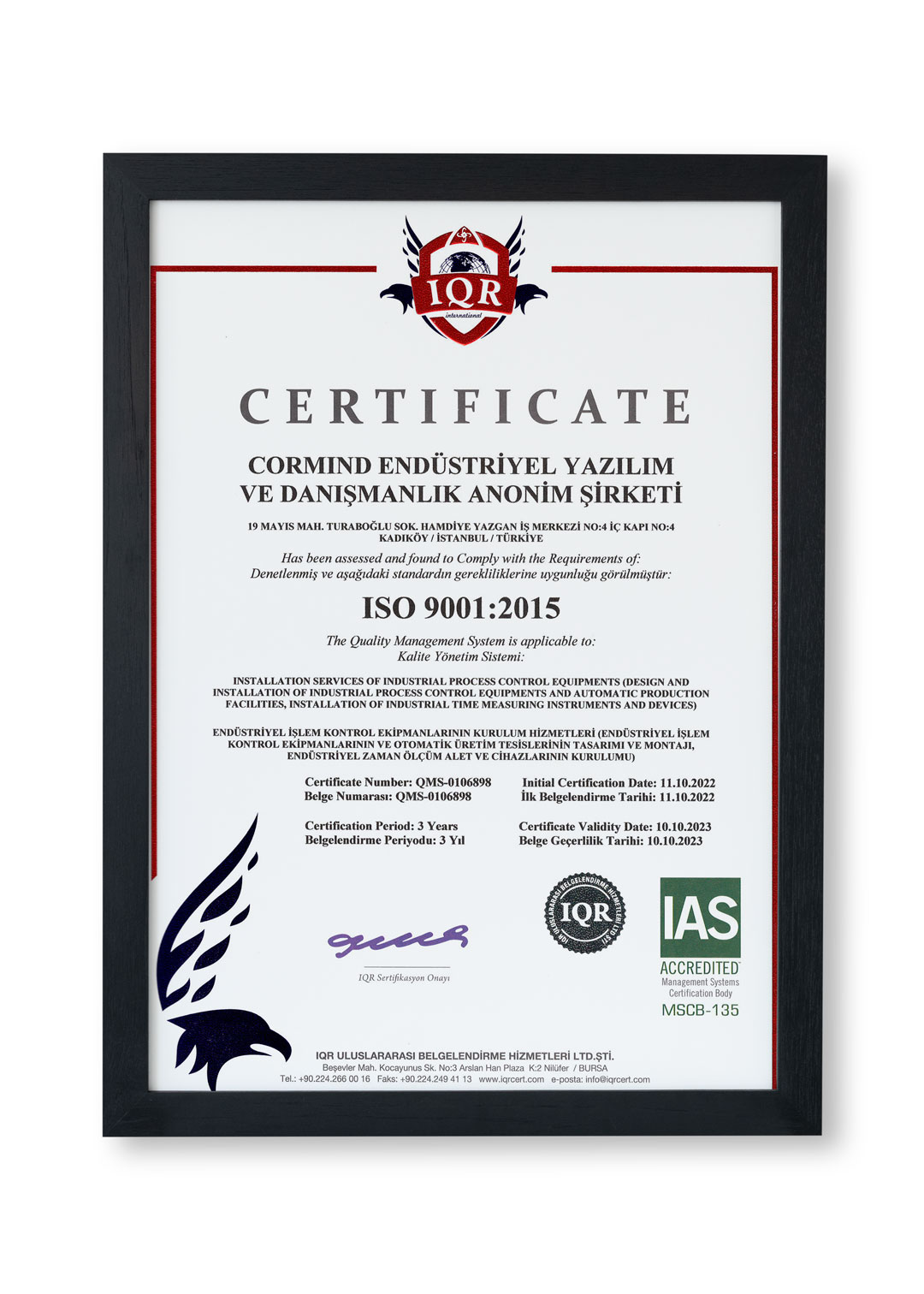
ISO 10002: 2018
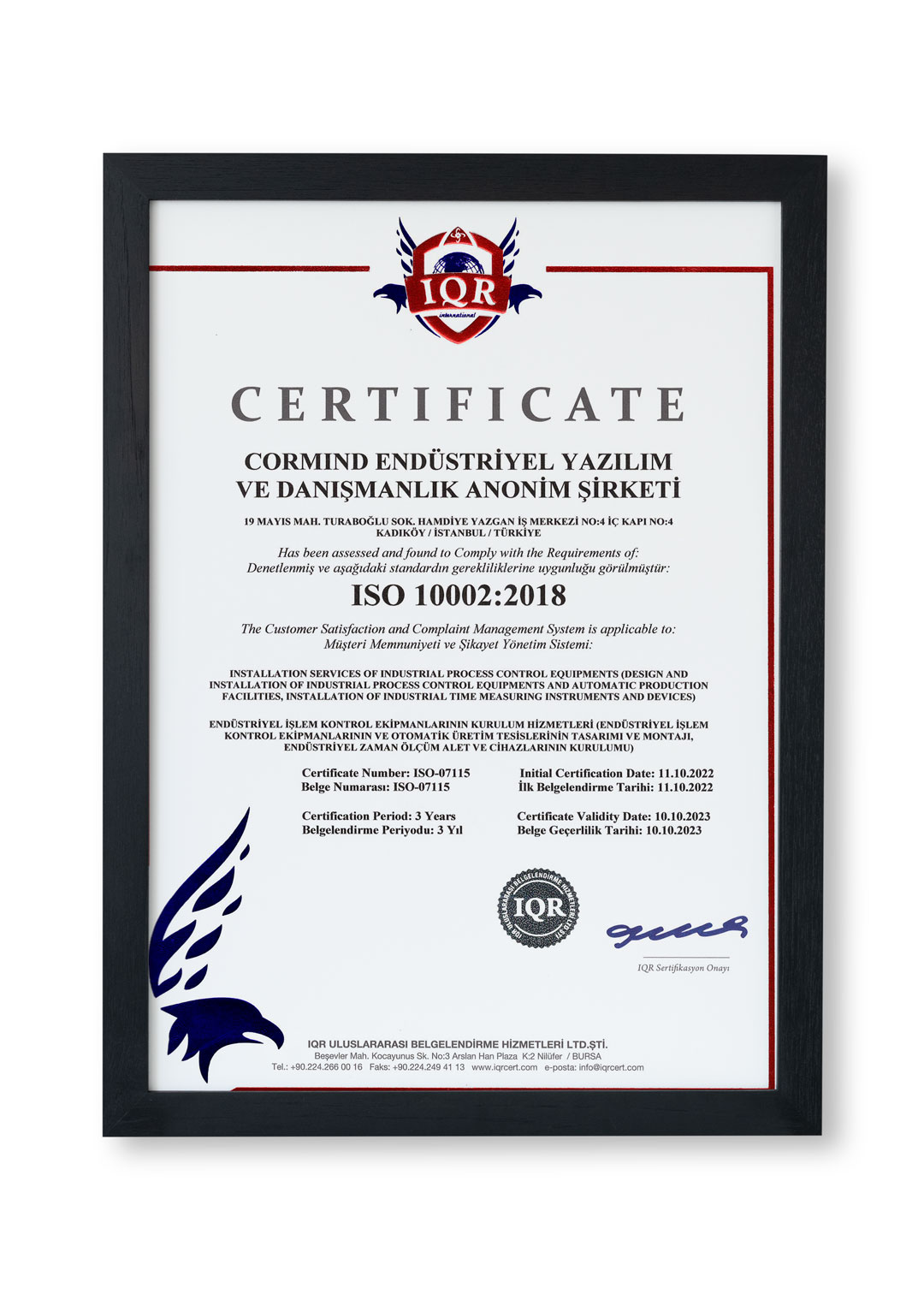
ISO 14001: 2015

ISO/TEC 20000-1: 2018
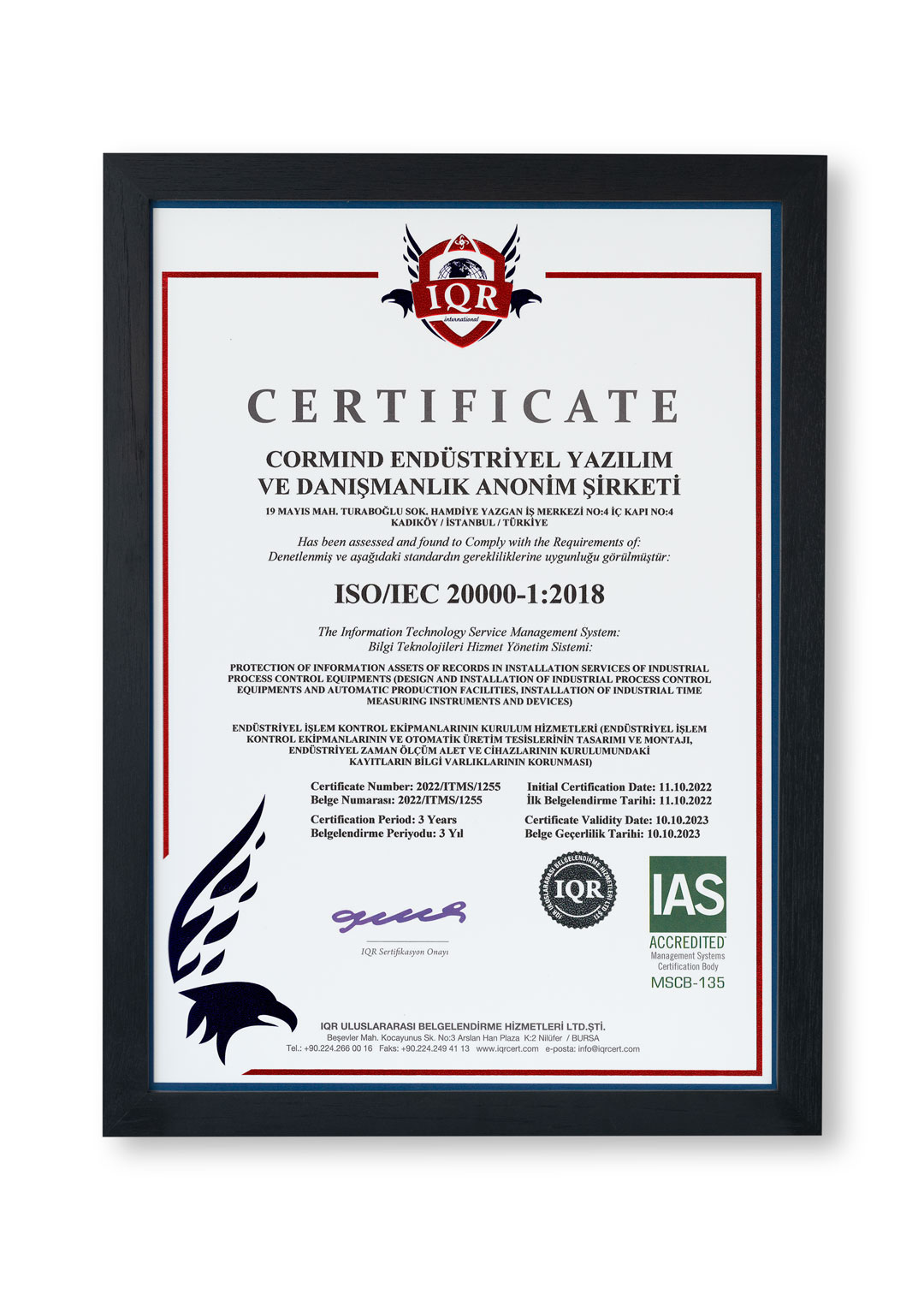
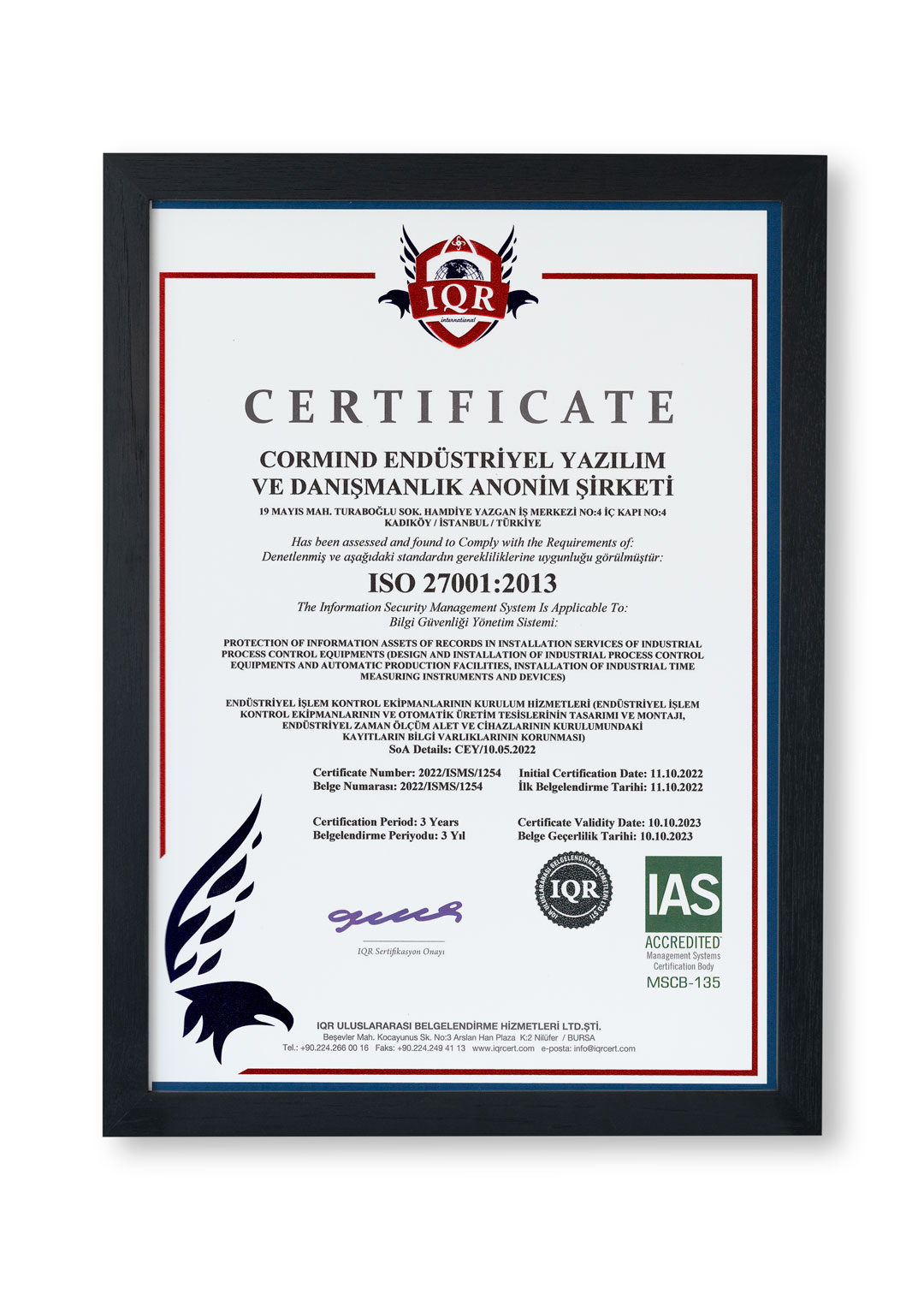
ISO 27001: 2013
TS EN ISO 56002


Are You Ready to Open Pandora’s Box for Your Business?
Frequently Asked Questions
What is Process Optimization in Production?
Process optimization in production encompasses improvement efforts aimed at making production stages faster, more cost-effective, and more efficient. These efforts include optimizing raw material usage, managing workforce efficiently, operating machines at optimal levels, and reducing energy consumption.
Process optimization ensures not only better machine performance but also improved production flow and effective resource use. Reducing waste, implementing automation systems, and responding more swiftly to customer demands are also part of this framework.
With the spread of Industry 4.0 technologies, digital transformation in production has accelerated; data-driven, intelligent, and flexible process management has become widespread. In today’s highly competitive environment, companies that successfully optimize their processes gain both cost advantages and increased customer satisfaction through improved quality.
Core Components of Production Process Optimization
For production process optimization to be successful, specific components must be integrated correctly. These components aim to enhance the performance of production lines while creating a sustainable production environment.
Data Collection and Real-Time Monitoring
Real-time data collection and monitoring are fundamental to process optimization. Through sensors, IoT devices, and manufacturing execution systems, continuous data is collected, enabling real-time process monitoring. This allows for early detection of errors, identification of bottlenecks, and timely interventions.
Using big data analytics tools, inefficiencies in production can be analyzed, error rates reduced, and energy use optimized. Cloud-based systems provide remote access to data and support better-informed production decisions.
Analysis with Artificial Intelligence and Machine Learning
Artificial intelligence (AI) and machine learning (ML) make production processes more predictable and intelligent. Through big data analysis, bottlenecks, inefficiencies, and sources of errors in the production line are identified and processes are improved accordingly.
Machine learning algorithms can also be integrated into predictive maintenance systems to anticipate machine maintenance needs. This prevents unplanned downtimes and reduces maintenance costs. Vision-supported quality control systems can detect even microscopic defects in products automatically, improving production quality and minimizing error rates.
Smart Production Processes with IoT
IoT (Internet of Things) technology connects production machines and devices, creating a data-driven, integrated, and traceable production environment. With IoT sensors, machine status, energy consumption, and production performance can be monitored in real-time. Centralized system control enables more flexible and faster management.
Production Simulations with Digital Twins
Digital twin technology creates a virtual copy of production lines, enabling the simulation of different scenarios. This allows processes to be tested before physical production begins, potential errors to be anticipated, and optimization efforts to be more accurately executed.
Digital twins also help determine the optimal production model by analyzing parameters such as production speeds, energy consumption, and resource usage. This leads to increased efficiency and quality in production.
Automation and Robotic Solutions
Automation and robotic technologies reduce the need for human intervention, making the production process faster, more flexible, and error-free. Robots perform tasks such as assembly, welding, packaging, and quality control with high precision, enhancing workforce efficiency.
These systems can also quickly adapt to changing orders. Producing different products on the same production line becomes easier, enabling flexible responses to customer demands. Robotic solutions lower production costs and significantly reduce human errors.
Automation systems ensure continuous production while helping optimize labor costs. In the long run, they support the creation of a low-cost, high-quality, and competitive production model.
Industrial Applications of Production Process Optimization
Production process optimization is widely applied across industries to increase operational efficiency, reduce costs, and make production processes more sustainable. Industry-specific applications enable businesses to increase production speed and gain competitive advantage.
Mass Production and Fast Line Management
In industries like automotive, white goods, and food, where mass production is key, uninterrupted and high-efficiency line operations are crucial. Process optimization reduces bottlenecks and shortens production time, increasing production capacity.
Flexible Production and Custom Order Processes
As demand for personalized products grows, flexible manufacturing capability has become essential for businesses. Through process optimization, companies with custom-order production can respond more quickly and work more profitably by minimizing resource waste.
Inventory Management and Logistics Integration
Optimization applications help build a more integrated structure between production and the supply chain. This prevents excess inventory, shortens delivery times, and reduces storage costs. This integration is especially advantageous for fast-moving consumer goods.
Maintenance Processes and Failure Prevention
Predictive maintenance systems detect the need for machine maintenance before breakdowns occur. This approach reduces unplanned downtimes and ensures production continuity, improving operational efficiency.
Energy Efficiency and Resource Utilization
Reducing energy consumption is crucial for cost control and environmental sustainability. Process optimization identifies energy-intensive points on the production line, eliminates unnecessary consumption, and ensures more efficient resource use.
Integration of Production Process Optimization with Factory Operating Systems
For process optimization to be fully successful, all operations on the production floor must work in integration with digital systems. With factory operating systems like ERP, MES, and SCADA, production processes become more transparent, controllable, and measurable. This integration enables digital monitoring and optimization of all operations from production to maintenance.
Integrated Management with ERP, MES, and SCADA Systems
Enterprise Resource Planning (ERP), Manufacturing Execution Systems (MES), and control systems like SCADA cover all layers of production, from high-level oversight to detailed monitoring. Integration of these systems ensures seamless and efficient management of processes—from material flow and work order tracking to reporting.
Automated Data Collection and Reporting Solutions
Real-time data collection provides businesses with continuous monitoring and evaluation of production performance. With automated reporting tools, managers can analyze critical data like capacity utilization, production speed, and failure history to make more accurate and faster decisions.
Ensuring Process Continuity with Predictive Maintenance
Predictive maintenance analyzes machine sensor data to anticipate maintenance needs. Integration of these systems into production lines reduces unplanned downtimes, extends machine lifespan, and enables more planned maintenance processes—ensuring continuity of production.
Optimization of Production Planning and Scheduling
Production planning and scheduling software ensures work orders are executed in the most optimal order, optimizing resource use. Efficient allocation of materials, labor, and equipment prevents time losses and maximizes production capacity.
Advantages and Benefits of Production Process Optimization
Production process optimization offers strategic contributions to businesses by reducing costs, improving quality, and providing competitive advantage. Improved processes ensure smoother production line operation, optimized resource use, and reduced waste. This allows businesses to respond more quickly and flexibly to customer demands, increasing profitability.
Increase in Production Efficiency
Optimization efforts ensure more efficient use of machines and labor. Waiting times are reduced, workflow becomes orderly, and production capacity increases. Efficient planning supported by automation shortens production times while increasing output. Thus, businesses maximize productivity with the same resources.
Cost Reduction and Waste Prevention
Proper planning of resources prevents waste of raw materials, energy, and labor—directly contributing to lower production costs. Reducing unnecessary expenses, controlling scrap rates, and more effective inventory management bring major financial benefits. Well-planned processes also prevent excessive staffing and time losses.
Improvement in Production Quality
Optimized production processes raise quality standards. With more controlled operations, error rates decrease, and rework and return costs drop. Automatic quality control systems detect errors early, ensuring product quality consistency and strengthening brand reliability and customer loyalty.
Improved Employee Productivity and Workforce Management
Organized workflows allow employees to perform their duties more efficiently and with greater motivation. Balanced workload distribution reduces both workplace accidents and employee fatigue. In well-organized processes, employees use their time more effectively, increasing overall productivity and positively affecting operational performance.
Faster and More Flexible Response to Market Demands
In highly competitive markets, businesses that can provide fast and flexible responses to customer demands gain a significant advantage. Process optimization builds production infrastructure that adapts to changing order conditions. Custom production becomes faster, and products reach the market in a shorter time. This increases customer satisfaction and strengthens the business’s market position.