


Exact 3D Live
Digital Twin of your Factory
Scalable and
Modular
You can monitor all kinds of IIoT sensors, machines, forklifts etc. equipment or semi-finished products, employees and the location connected to them, instant data flow, process or work flow and perform retrospective analysis.

CIRCUIT TIME ANALYSIS
Monitor the spindle load or another analog metric during a part cycle. Overlap multiple cycles to analyze the inconsistencies or changes in over time.

PRODUCTION BOTTLENECK ANALYSIS
Follow the process with operator’s feedbacks to determine the costly bottlenecks, you can educate again and offer the better and more efficiency options.

QUALITY ANALYSIS
Determine the production process inefficiencies with operator knowledge. Create the warning systems by analyzing quality data and feedback from operators.

OPTIMIZE SETUP TIMES
Start, stop and monitor installation time to determine the improvement areas.. Visualize the installation stages and procedures to encourage the operators on time their Works.

MANAGE AND FOLLOW UNEXPECTED CHANGES
Monitor the performance of every transit and operator analytics. Measure the average changement times by shifting to create more efficient system which reduce the downtime.

OPTIMIZE PLANNING
Create the workflows which integrate with your ERP and refer from the real-time production data for recreation the jobs when the parameters triggered.
QUALITY CERTIFICATES
ISO 9001: 2015
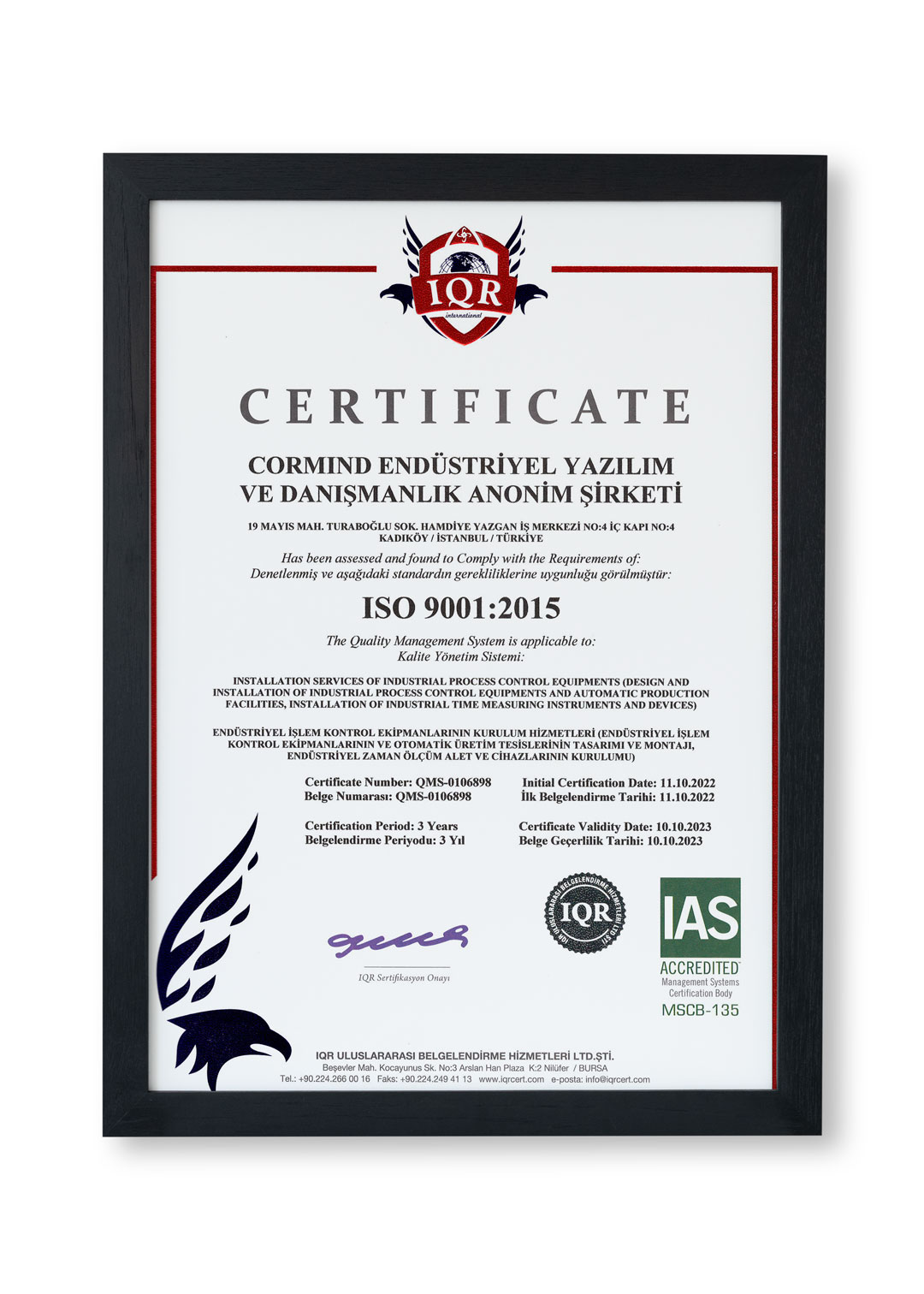
ISO 10002: 2018
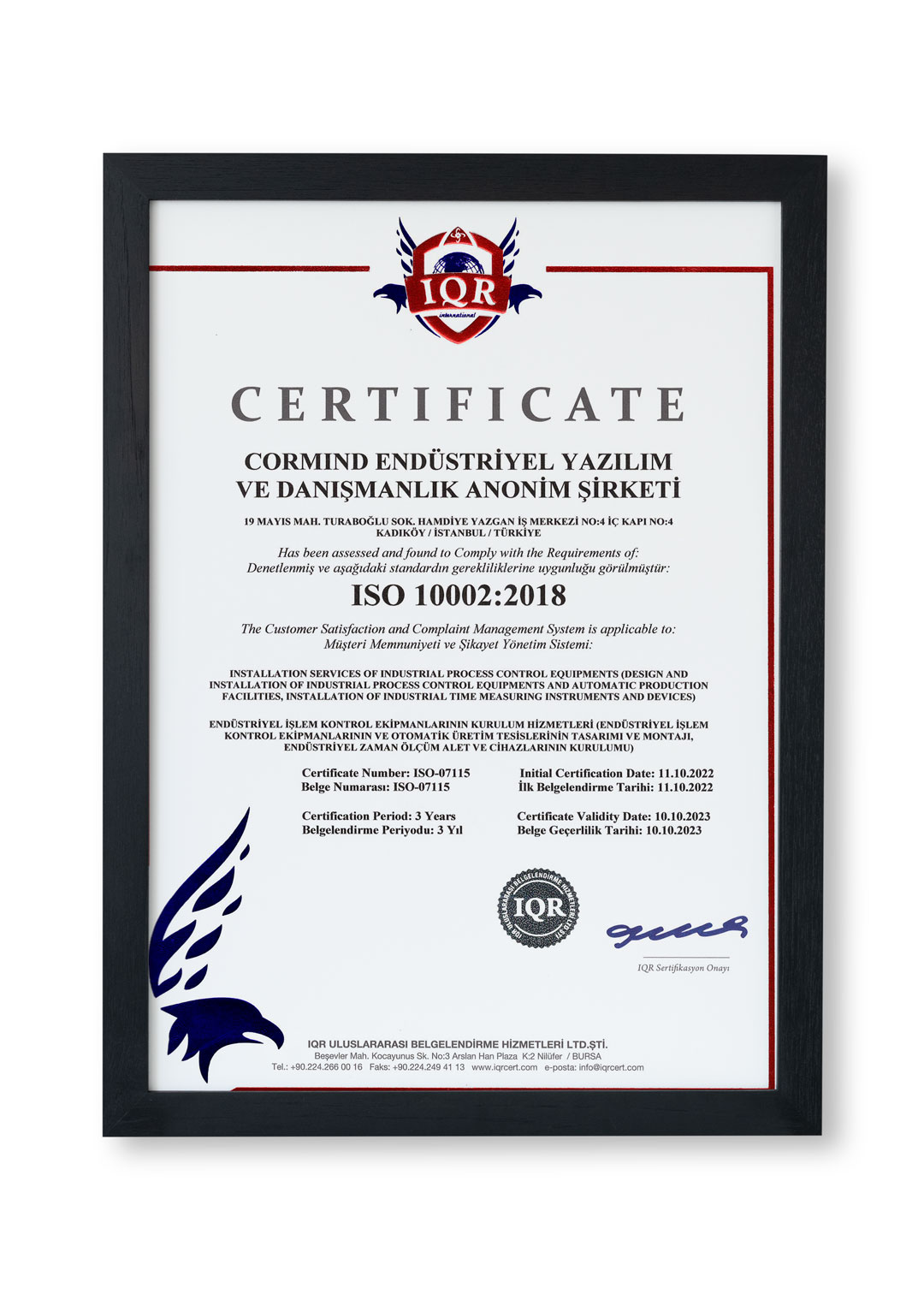
ISO 14001: 2015

ISO/TEC 20000-1: 2018
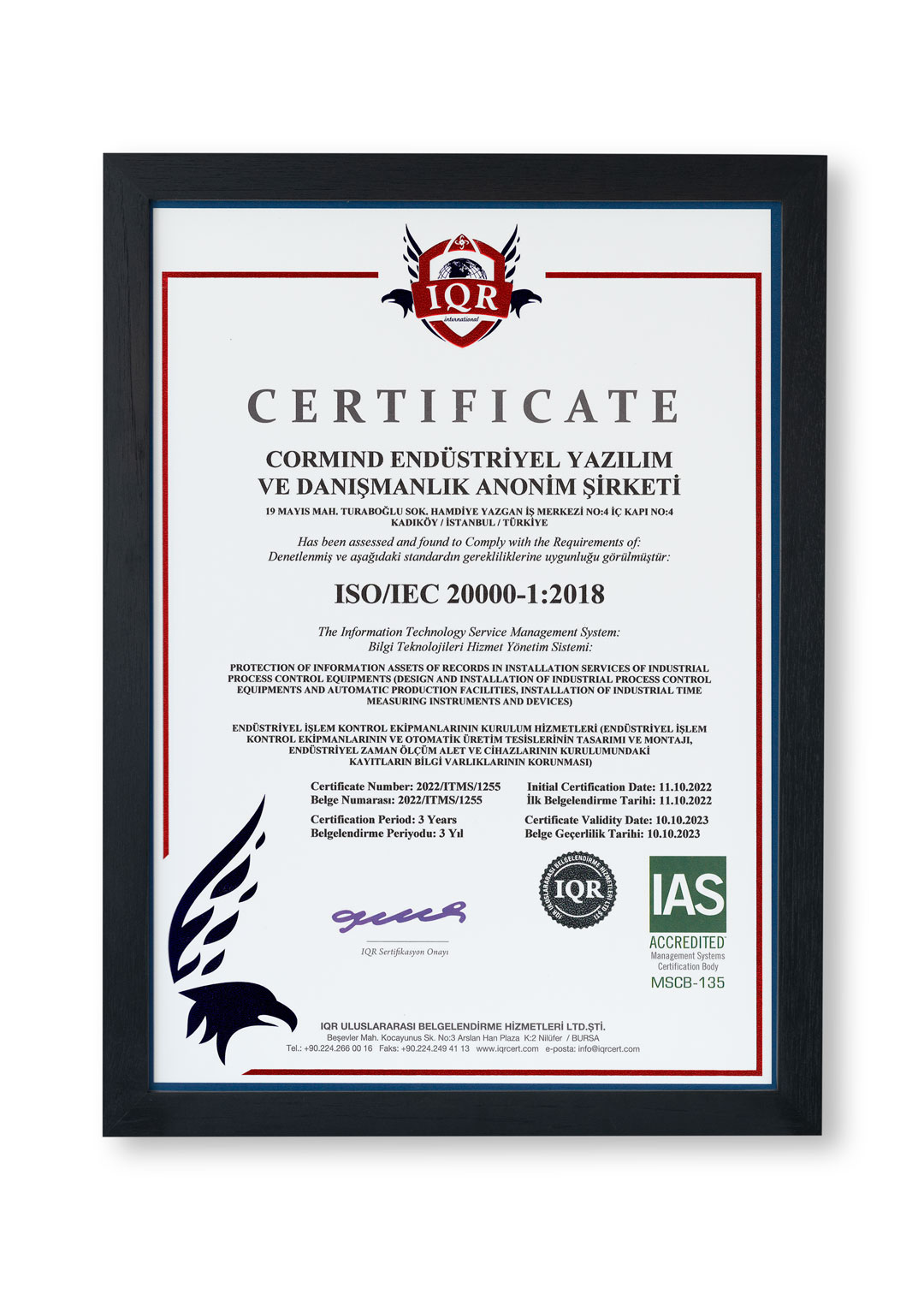
ISO 27001: 2013
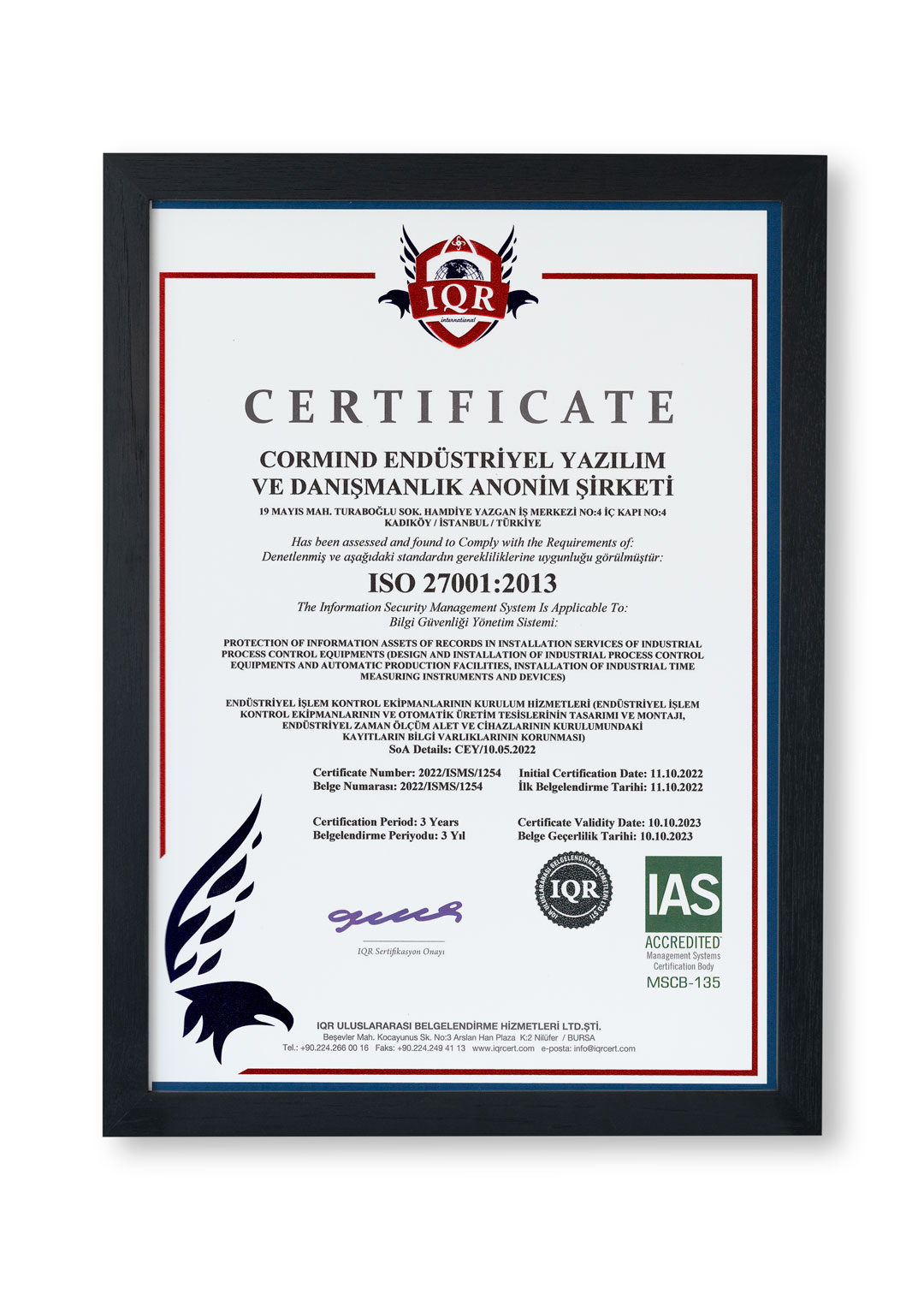
TS EN ISO 56002


Are You Ready to Open Pandora’s Box for Your Business?
Frequently Asked Questions
What is a Digital Twin?
A digital twin is a real-time digital replica of a physical object, system, or process. This technology makes it possible to analyze the behavior and performance of a system through virtual models built from data collected from physical assets.
Historical and real-time data collected from the real world is integrated into the digital model to simulate possible scenarios in advance. This allows businesses to make more informed and faster decisions. Widely used in industries such as manufacturing, healthcare, energy, and automotive, digital twin technology not only increases operational efficiency but also offers significant advantages in foreseeing risks in advance.
As one of the core components of Industry 4.0, this technology provides strategic benefits in terms of speed, quality, and cost optimization.
Core Components of Digital Twin Technology
Digital twin technology operates through the integration of key components such as real-time data collection and sensors, artificial intelligence and big data analytics, virtual simulations and modeling, and the incorporation of cloud and edge computing. These components enable the system’s accuracy, efficiency, and real-time interaction.
Real-Time Data Collection and Sensors
One of the most critical components of digital twins is sensors that continuously collect data from physical assets. These sensors measure various parameters such as temperature, pressure, vibration, speed, and energy consumption and transmit the data to the digital platform in real time.
This data enables real-time monitoring of the condition of physical systems. Changes such as performance drops or abnormal vibrations can be instantly detected, allowing for the prediction of potential failures. Additionally, this data allows businesses to prepare for future risks.
Artificial Intelligence and Big Data Analytics
One of the most important factors that reveal the true value of digital twins is the analysis of collected data. Big data analytics involves processing massive amounts of data and converting them into meaningful information. Artificial intelligence and machine learning algorithms come into play in this process, learning from historical data and producing forecasts for the future.
AI is used to assess and optimize system performance. For example, in a production line, machine learning algorithms are used to analyze efficiency in the production process to improve product quality. These analyses lead to process improvements and help prevent errors.
Thanks to big data analytics, businesses can not only evaluate their current state but also predict future demand and plan production accordingly.
Virtual Simulations and Modeling
One of the key benefits of digital twin technology is the ability to simulate physical processes in a virtual environment. Through virtual simulations, different scenarios can be tested on the production process or products. This saves time and cost compared to physical testing.
In an automotive factory, simulations can be conducted to determine the most efficient production strategy by improving the performance of machines. Likewise, before launching a new product, its durability and performance can be measured through tests on the digital twin, and design improvements can be made.
Additionally, the behavior of medical devices in clinical settings can be tested virtually, making the development process safer and faster. In energy systems, consumption models can be simulated to create more balanced and efficient production scenarios.
In the food industry, sensitive parameters such as temperature and humidity can be tested under different conditions to ensure product safety; in furniture manufacturing, the integration of new designs into the production process can be modeled in advance to optimize resource use.
Modeling allows potential risks and possible failures in the production process to be tested in advance so that necessary precautions can be taken.
Cloud and Edge Computing Integration
To operate effectively, digital twins require the fast and secure processing of large volumes of data. At this point, cloud computing and edge computing technologies come into play.
Cloud computing provides the necessary infrastructure to store and analyze large datasets. With cloud technologies, businesses can reduce data storage costs and conduct broader analyses.
Edge computing allows data to be processed close to the source. This technology is especially critical for digital twins used in production lines. By processing data where the device is located, delays are minimized, and real-time decision-making processes are accelerated.
Industrial Applications of Digital Twins
Digital twin technology is used in many different sectors, offering significant benefits particularly in fields like manufacturing, healthcare, and energy. It helps manage processes more efficiently, reduce costs, and predict risks in advance.
Digital Twin Applications in Smart Factories
As one of the core elements of Industry 4.0, digital twins are widely used in smart factories to enhance production process efficiency. Digital twins of machines on production lines are created, and their performance is continuously monitored and analyzed.
This application helps predict failures in advance to prevent production line downtimes. For example, data collected from machines in an automotive factory is analyzed to determine when the machines will require maintenance. This prevents unexpected downtimes and ensures uninterrupted production.
Product Development and Testing Processes
Digital twins play a significant role in product development processes. Products are tested virtually before launch to analyze their performance. These tests help identify areas that need improvement during the design phase.
For instance, a new aircraft engine developed in the aviation industry can be tested under different flight scenarios through a digital twin. This allows performance under real conditions to be analyzed in advance and necessary improvements to be made.
Predictive Maintenance and Failure Prevention
One of the greatest advantages of digital twins is in predictive maintenance. Data collected from sensors is analyzed to continuously monitor machine performance. This enables the early detection of failure probabilities and the planning of maintenance activities accordingly.
This process not only reduces maintenance costs but also prevents potential downtimes in production processes. For example, in a power plant, the performance of turbines can be continuously monitored using a digital twin, allowing any potential failure to be detected and addressed in advance.
Supply Chain and Logistics Management
Digital twin technology also helps manage supply chain and logistics processes more effectively. With digital twins, supply chain processes are continuously monitored and optimized.
This technology increases efficiency at every stage, from inventory management to logistics processes. For instance, a retail company can monitor inventory levels in real time using digital twins and optimize reorder processes based on demand forecasts.
Integration of Digital Twin and Factory Operating Systems
When integrated with factory operating systems, digital twin technology creates revolutionary changes in production processes. This integration enables faster, more flexible, and more efficient management of production processes.
Production Optimization and Process Simulations
Integration of factory systems with digital twins helps optimize production processes. Through virtual simulations, potential problems in the production line can be tested in advance and preventative measures taken.
This increases production efficiency while also reducing costs. Simulating production lines allows businesses to use their resources more effectively.
Operational Efficiency and Decision Support Mechanisms
Digital twin integration makes decision-making processes more efficient. Decision support mechanisms supported by real-time data help businesses manage production processes more accurately.
This process increases production efficiency while also providing businesses with a competitive advantage.
Real-Time Monitoring and Remote Management
Thanks to digital twin technology, production processes can be monitored and managed in real time. This feature provides a significant advantage, especially for detecting and intervening in potential disruptions in large production facilities.
Cormind successfully implements digital twin solutions across many areas—from production and data analysis to real-time monitoring systems and decision support mechanisms. With experience in different sectors, it offers integrations tailored to the specific needs of each business. For more information, you can visit the contact page.
Advantages and Benefits of Digital Twins
Digital twin technology is an innovation that transforms many areas from manufacturing to the service industry, providing businesses with sustainable competitive advantages. By digitally replicating physical processes, companies can manage operations more effectively, minimize costs, and achieve operational excellence.
This technology creates a deep impact not only in production processes but also in maintenance, design, supply chain, product development, and decision support mechanisms. With digital twins, businesses have the opportunity to both improve existing processes and anticipate possible future risks.
Thanks to advanced analytics and modeling capabilities, real-time data processing, and proactive management, digital twins enhance innovation capabilities and support long-term growth strategies. Here are the most important benefits offered by digital twin technology:
Increased Efficiency in Production Processes
Digital twin technology helps businesses achieve maximum efficiency in their production processes. With real-time data flow and virtual simulations, each stage of production is analyzed in detail. As a result, processes are continuously optimized, and resources are used more effectively.
Efficiency improvement starts with the early detection of possible disruptions in production lines. Data collected through sensors is analyzed on the digital twin to evaluate machine performance. Based on this evaluation, potential bottlenecks in production processes can be identified in advance, and preventive measures can be taken.
Additionally, digital twins enable optimal utilization of machine capacities on production lines. By continuously analyzing speed, energy consumption, and output, optimal operating conditions are determined. For example, in a car manufacturing facility, digital twins can help increase production speed while minimizing energy consumption.
Another major benefit provided by digital twins is the accuracy and flexibility they offer in resource planning. The needs for raw materials and labor are predicted in advance through system analysis and used in the most efficient way. This not only speeds up the production process but also avoids unnecessary costs.
Cost and Time Savings
One of the major contributions of digital twin technology is the reduction of production and operating costs while minimizing time loss in processes. Through real-time data analysis and virtual testing, businesses can optimize their processes without needing expensive physical tests.
Simulations provide significant savings in time and cost, especially during product development. Prototypes are tested digitally before physical production, and design errors are identified early. This accelerates the product development process and significantly reduces costs.
Predictive maintenance applications also help detect potential machine failures in advance and schedule maintenance accordingly. This reduces unplanned downtime and allows production processes to continue uninterrupted.
Digital twins also contribute to reducing energy costs. Energy consumption in production processes is continuously analyzed, and machines consuming excessive energy are identified. Optimized operating strategies are then applied to minimize energy usage, providing cost advantages for businesses.
Another key savings area is in workforce planning. Digital twins analyze the productivity of workers on the production line and more accurately determine labor needs. This avoids unnecessary personnel costs and ensures the most efficient use of available workforce.
Risk Management and Safety Measures
Digital twin technology plays an important role in risk management. By simulating physical assets digitally, all potential disruptions in production processes can be predicted in advance. This minimizes production-related risks.
Especially in complex production processes, different scenarios can be tested using digital twins to identify potential risks in advance. This saves businesses time and prevents costly disruptions.
In terms of safety measures, digital twins also offer significant advantages. They perform risk analyses to detect potential hazards in facility safety, employee safety, and cybersecurity.
From a physical safety perspective, the safety status of machines used in production facilities is continuously monitored. For example, if the temperature of a machine operating at high heat reaches a dangerous level, the system automatically alerts and takes necessary precautions.
From a cybersecurity perspective, digital twins help detect system vulnerabilities and take preventative measures. Potential cyberattacks on production processes can be simulated in advance and defense mechanisms tested.
Risk management also includes financial risks. Digital twins conduct cost analyses in production processes and detect potential budget overruns in advance. This enables businesses to manage costs more effectively.
Proactive and Predictive Maintenance
One of the most important benefits of digital twin technology is supporting proactive maintenance processes. In traditional maintenance methods, machines are stopped at regular intervals for maintenance, which can negatively impact production continuity. However, with predictive maintenance applications integrated with digital twins, the probability of failure in machines can be predicted in advance, and maintenance activities can be planned beforehand.
This technology continuously monitors machine performance and detects signs of potential failures in advance. For example, if an increase in vibration levels is observed in a motor on the production line, the system provides a warning to ensure timely maintenance. This prevents unplanned downtimes and keeps the production process uninterrupted.
Predictive maintenance also helps reduce costs. Maintenance is performed before failures occur, preventing issues that could lead to higher expenses. Additionally, since maintenance operations are carried out in a planned manner, maintenance costs are optimized, and resource usage becomes more efficient.
Another advantage of proactive maintenance is that it extends the lifespan of equipment. With regular maintenance and early intervention, wear and tear on machines are minimized. This delays the need for new equipment investments and provides long-term cost savings.
Thanks to digital twins, when maintenance should be performed, which equipment requires priority maintenance, and how long maintenance operations will take can all be planned in advance. This allows maintenance to be carried out without interrupting the production process and ensures production continuity.